 |

| Title: Astronomy Picture of the Day | |
| friendsoffortiesfive > General > General Discussion | Go to subcategory: |


| Author | Content |
Niceguy2

|
|
|
Date Posted:03/06/2014 11:29 PMCopy HTML I really love this site and |
|
Niceguy2
|
#6526 |
|
Re:Astronomy Picture of the Day Date Posted:10/28/2026 12:49 AMCopy HTML  Noctilucent Clouds over SwedenExplanation: Sometimes it's night on the ground but day in the air. As the Earth rotates to eclipse the Sun, sunset rises up from the ground. Therefore, at sunset on the ground, sunlight still shines on clouds above. Under usual circumstances, a pretty sunset might be visible, but unusual noctilucent clouds float so high up they can be seen well after dark. Normally too dim to be seen, they may become visible just after sunset during the summer when illuminated by sunlight from below the horizon. Noctilucent clouds are the highest clouds and are known more technically as polar mesospheric clouds. Featured here as they appeared in early August 2026, a network of blue noctilucent clouds was captured in the distant sky above a field of green grass near Linköping, Sweden, with trees in stark silhouette across the horizon. Much about noctilucent clouds has been discovered only in the past two decades, and how they form and evolve remains a topic of active research. |
|
Niceguy2
|
#6527 |
|
Re:Astronomy Picture of the Day Date Posted:10/29/2026 1:05 AMCopy HTML VIDEO NOT AVAILABLE The Mutual Occultation of Ganymede and IoExplanation: Jupiter is one of the least lonely planets in the Solar System, at least when it comes to natural satellites. 115 moons have been discovered orbiting Jupiter so far! (Saturn has the most with 293, but who’s counting.) Ganymede and Io, two of Jupiter’s Galilean moons, met in the sky on October 20th, 2026. Today’s video captures the meeting, with Ganymede briefly blocking Io from view. This event, when an astronomical object passes in front of another and either completely or partially blocks it, is called a mutual occultation. The mutual occultations of Galilean moons are rare to witness because they require Earth’s edge-on view of their orbits. This occurs once every 6 years when Jupiter reaches its equinox and appears less “tilted”. Ganymede is also casting its shadow on Jupiter’s right side. Any fictional Jovian species within the shadow would experience a solar eclipse! |
|
Niceguy2
|
#6528 |
|
Re:Astronomy Picture of the Day Date Posted:10/30/2026 1:06 AMCopy HTML 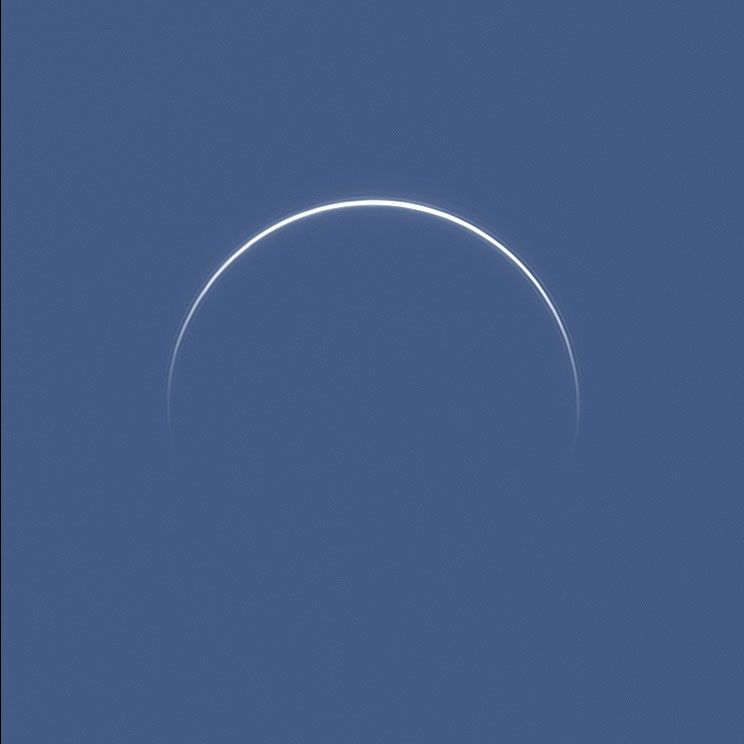 The Horns of VenusExplanation: That's no moon. But you could be forgiven for thinking it was a crescent Moon in the sky. It is a lesser known fact that Venus also has phases. (What about other planets?) The featured image shows Venus seen almost directly between the Sun and the Earth. This happens once every year and a half, and it is like the alignment that happens every month during a new Moon. But the new Moon is dark, while Venus' backlit atmosphere refracts and scatters the sunlight, creating a glowing crescent arc that extends beyond 180 degrees: the tips of this arc are called the "horns". The crescent can be seen with a small telescope or binoculars during twilight, but those with exceptionally acute eyesight may be able to see it with the unaided eye. Ancient Babylonian astronomers may have been the first to study Venus' brightness changes, which are related to its phases. Many other cultures have similar astronomical records, including the oldest surviving Maya book. |
|
Niceguy2
|
#6529 |
|
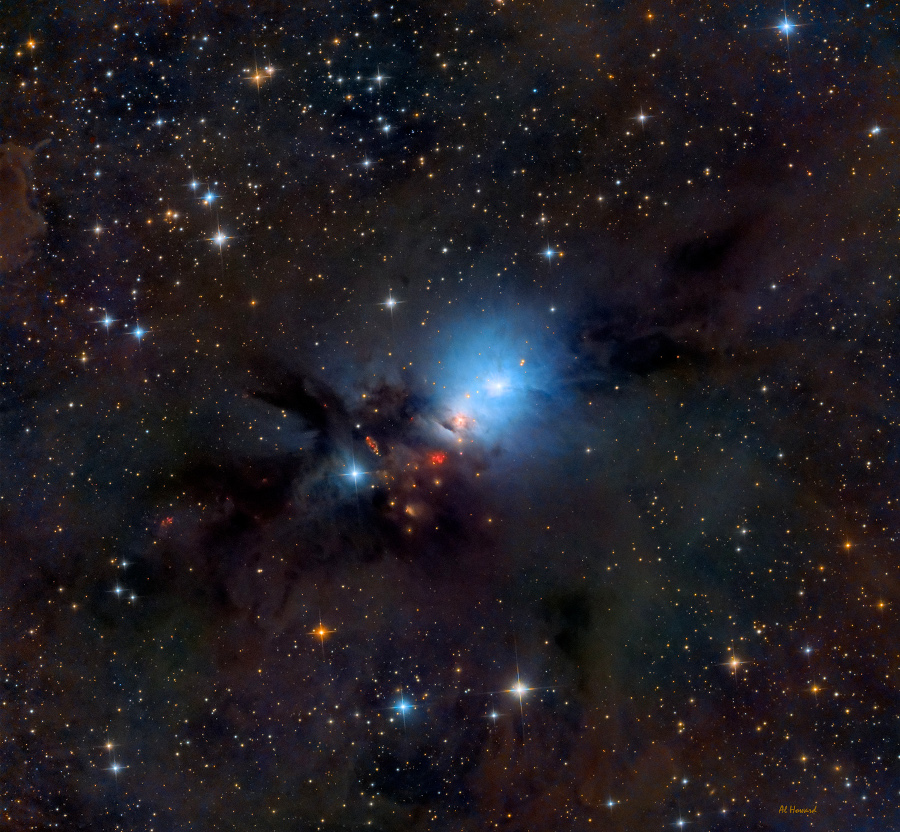
Re:Astronomy Picture of the Day Date Posted:10/31/2026 2:38 AMCopy HTML  Haunting the Cepheus FlareExplanation: Spooky shapes seem to haunt this dusty expanse, drifting through the night in the royal constellation Cepheus. Of course, the shapes are cosmic dust clouds visible in dimly reflected starlight. Far from your own neighborhood, they lurk above the plane of the Milky Way at the edge of the Cepheus Flare molecular cloud complex some 1,200 light-years away. Over 2 light-years across and brighter than most of the other ghostly apparitions, vdB 141 or Sh2-136 is also known as the Ghost Nebula. It lies at lower right in the starry field of view. Inside the Ghost Nebula are reddish telltale signs of dense cores collapsing in the early stages of star formation. With the eerie hue of interstellar dust reflecting bluish light from hot young stars of NGC 7023, the Iris Nebula stands out against the dark just left of center. In the broad telescopic frame, these fertile interstellar dust fields stretch almost six full moons across the sky. |
|
Niceguy2
|
#6530 |
|
Re:Astronomy Picture of the Day Date Posted:11/01/2026 12:50 AMCopy HTML 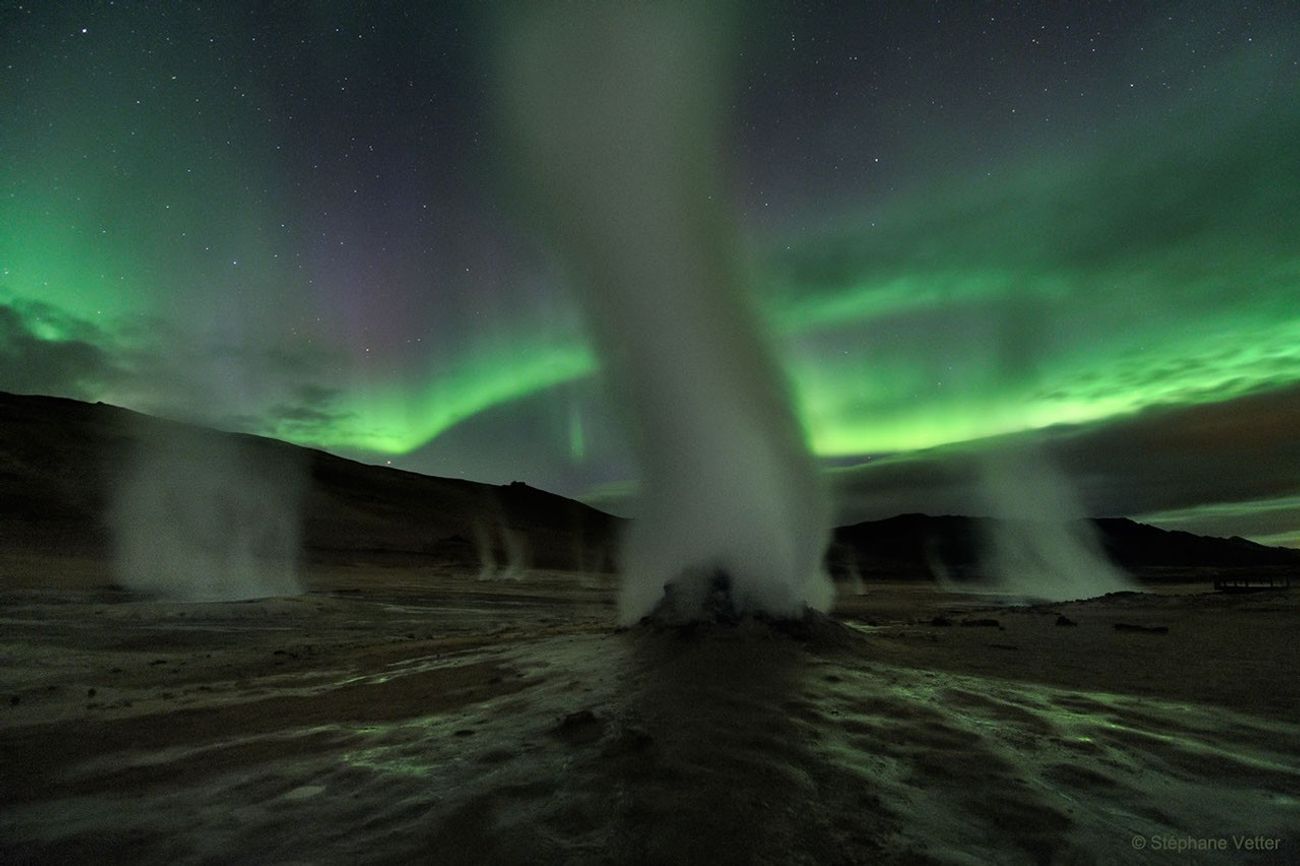 Night on a Spooky PlanetExplanation: What spooky planet is this? Planet Earth on a dark and stormy night, of course. The ghostly scene was photographed at Hverir, a geothermally active area found along northeastern Iceland's volcanic landscape. Triggered by solar activity, geomagnetic storms have unleashed energetic particles trapped in Earth's magnetic field. Penetrating the planet's upper atmosphere at high latitudes, the particles create auroral displays in the starry night sky. Ghostly towers of steam and gas are venting from local fumaroles to dance against the eerie, greenish northern lights. For now, auroral activity on planet Earth remains in a high state as the Sun is only in early phases of decline from the peak of its solar activity cycle. And soon, other ghostly apparitions may dance in your neighborhood. Happy Halloween! |
|
Niceguy2
|
#6531 |
|
Re:Astronomy Picture of the Day Date Posted:11/02/2026 1:57 AMCopy HTML 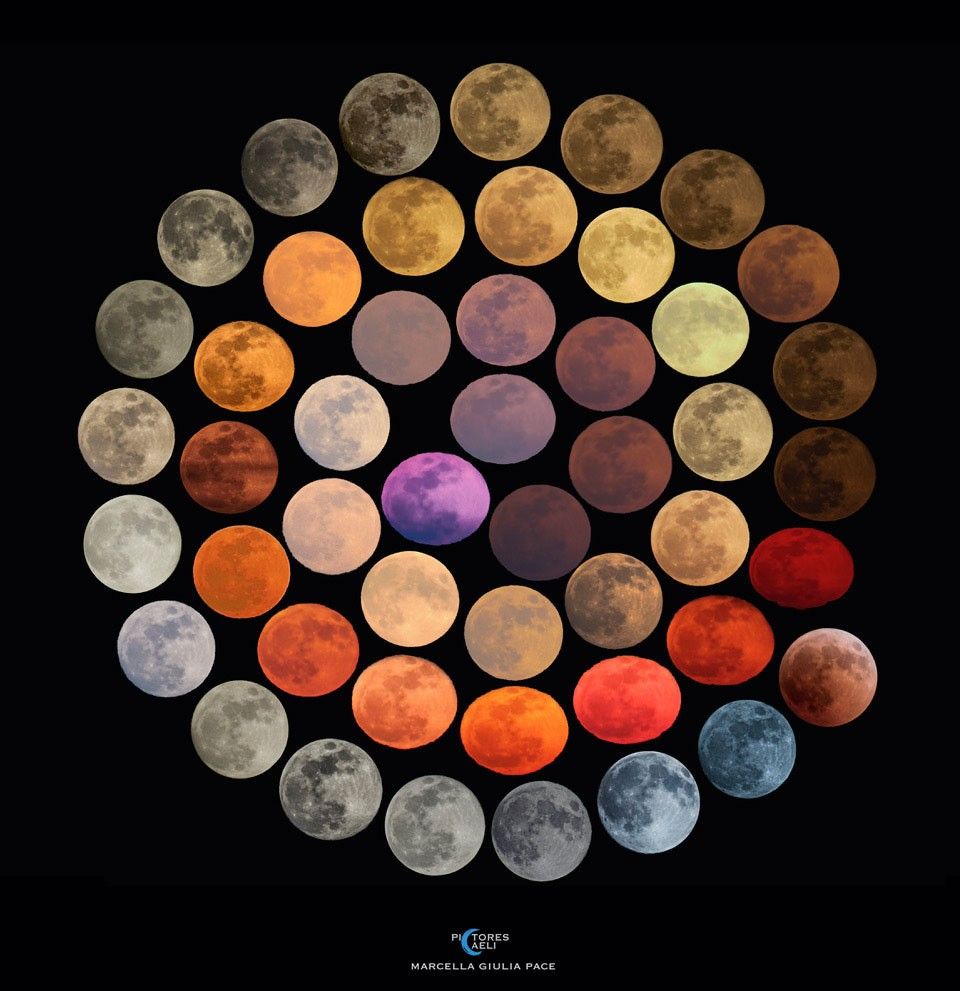 Colors of the MoonExplanation: What color is the Moon? It depends on the night -- and the time. Outside of the Earth's atmosphere, the dark Moon, which shines by reflected sunlight, appears a magnificently brown-tinged gray. The featured image highlights a collection of apparent colors of the full moon on Earth, documented by one astrophotographer over 10 years from different locations across Italy. A red- or yellow-colored moon usually indicates a moon seen near the horizon. There, some of the blue light has been scattered away by a long path through the Earth's atmosphere, sometimes laden with fine dust. A blue-colored moon is more rare and can indicate an atmosphere carrying larger dust particles. What created the purple moon is unclear -- it may be a combination of several effects. The last image captures the total lunar eclipse of 2018 July -- where the moon, in Earth's shadow, appeared a faint red -- due to light refracted through air around the Earth. Have you ever seen an unusually colorful Moon? |
|
Niceguy2
|
#6532 |
|
Re:Astronomy Picture of the Day Date Posted:11/03/2026 1:08 AMCopy HTML 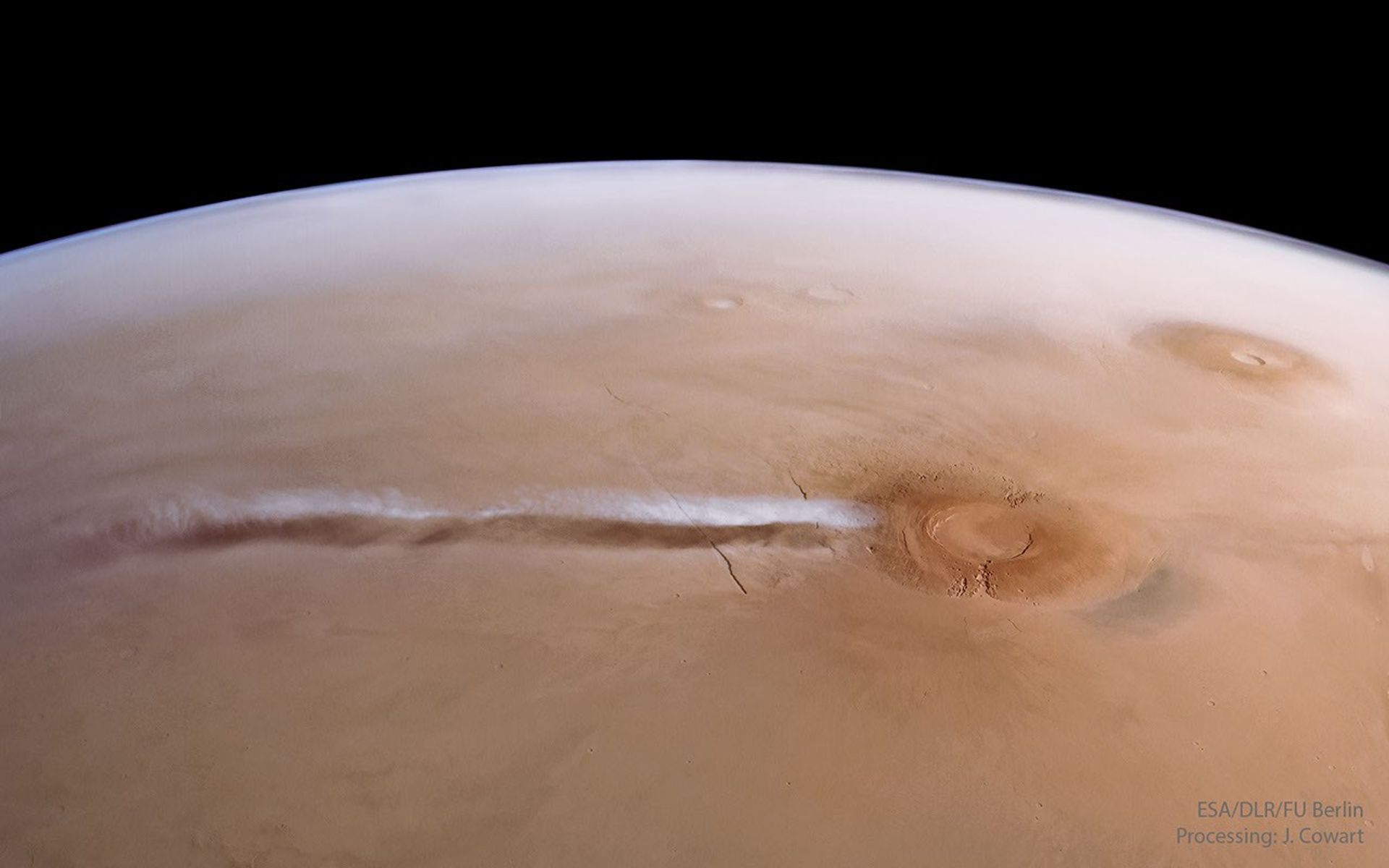 A Long Cloud on MarsExplanation: What’s causing this unusually long cloud on Mars? Known as the Arsia Mons Elongated Cloud (AMEC) and first recorded by NASA’s Viking Orbiter 2 in 1977, the strange cloud has been imaged in greater detail more recently by ESA’s robotic Mars Express spacecraft. The featured image is from 2018. The cloud forms only during spring and summer seasons and then only during morning hours. Made of water-ice, the most familiar process that causes cloud crystals to form around bits of dust would fail due to the thinness and lack of dust high in the Martian atmosphere. Leading speculation holds that dust is not involved. After the cloud forms near the volcano Arsia Mons, wind blows the cloud downstream — creating a tail that can extend over 1500 kilometers. Efforts to better understand AMECs will continue, an understanding that may bolster a more complete view of cloud formation on Earth. |
|
Niceguy2
|
#6533 |
|
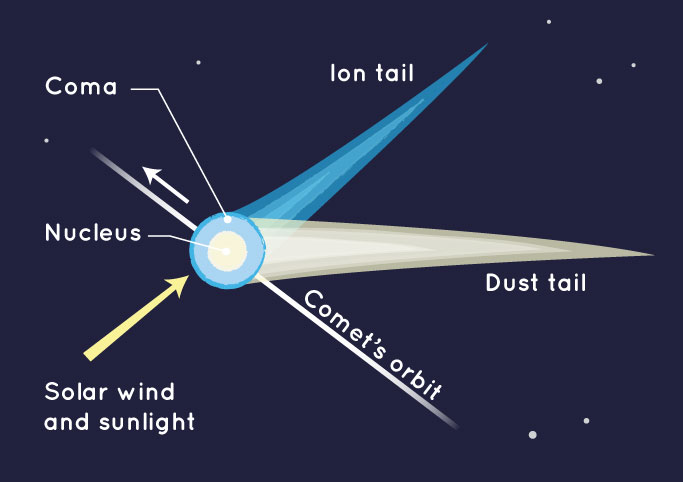
Re:Astronomy Picture of the Day Date Posted:11/04/2026 3:11 AMCopy HTML 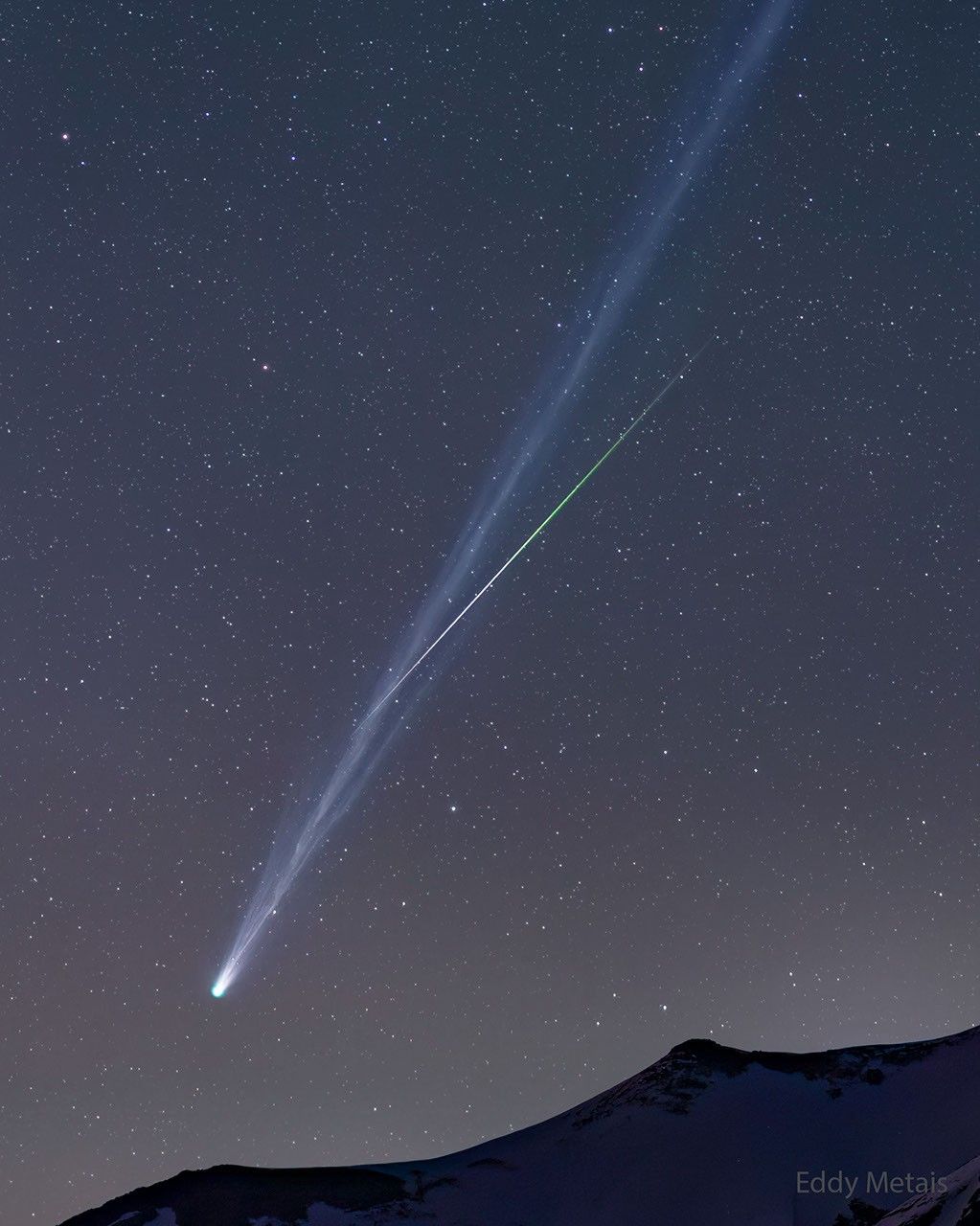 Comet PanSTARRs and Rainbow MeteorExplanation: Did this meteor come from that comet? Probably not. Although many meteors do originate from comets, there are thousands of comets that have visited the inner Solar System recently, and matching meteors to them can be tricky. And to be clear, the pictured comet is far behind the streaking meteor. Comet C/2025 R3 (PanSTARRS) was captured from Hautacam, France in April when the giant space iceberg sported impressive ion (blue) and dust tails. Sand-sized rocky debris that enters Earth’s atmosphere typically appears as meteors, while the colorful foreground streak here may indicate a complicated composition. This month three notable meteor showers will reach their peaks. Over the next few days, the Southern Taurids will be reaching their apex, while the Northern Taurids will top out about a week later. Both originate from Comet 2P/Encke. November is most famous for the Leonids Meteor Shower, though, which originates from Comet 55P/Tempel-Tuttle and will reach its crescendo in about two weeks. |
|
Niceguy2
|
#6534 |
|
Re:Astronomy Picture of the Day Date Posted:11/05/2026 2:43 AMCopy HTML 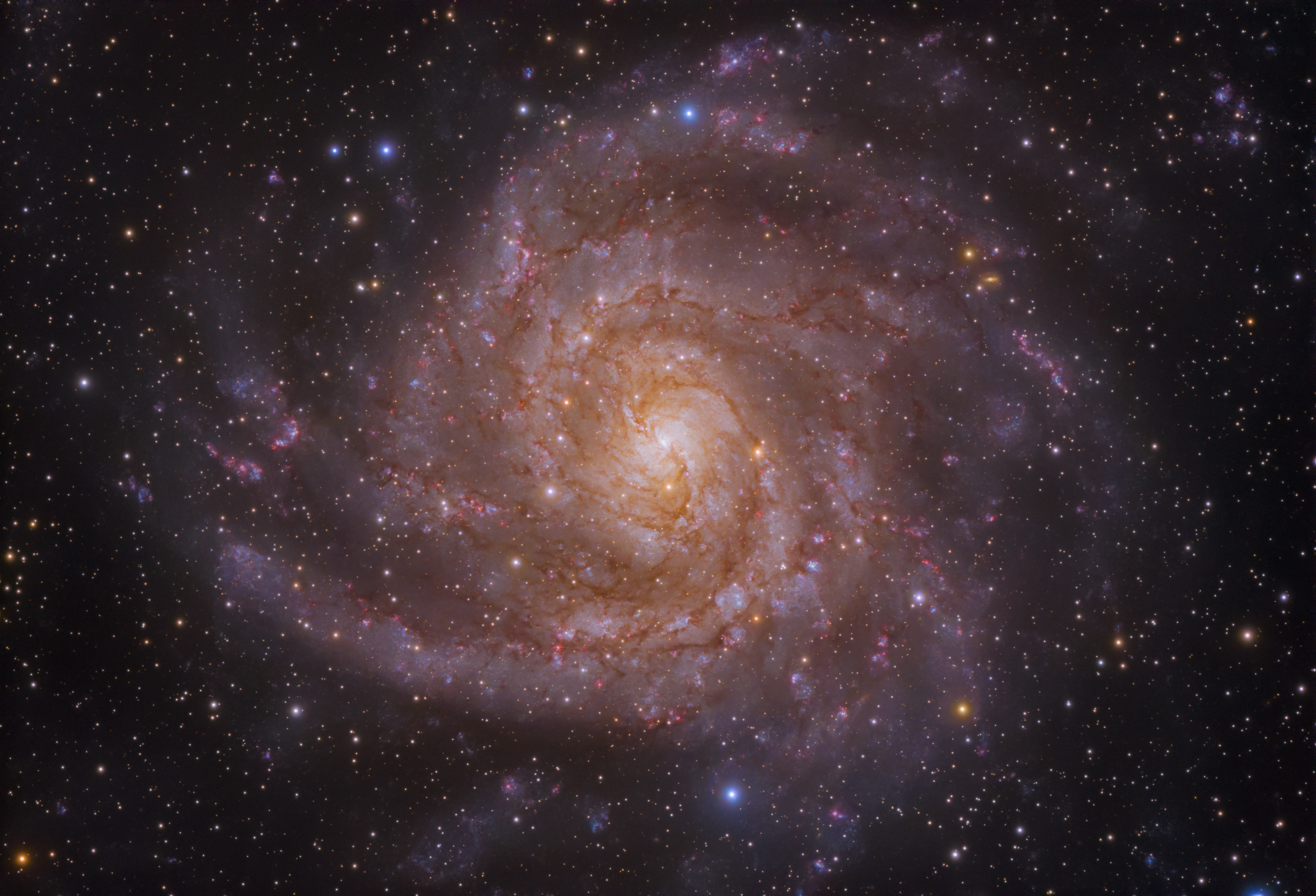 The Not-So-Hidden Galaxy, IC 342Explanation: “I see” IC 342, the Hidden Galaxy! Today’s image peers through the plane of the Milky Way, through all its gas, dust and stars, to unveil this spiral galaxy. IC 342 (or Caldwell 5) is one of the brightest members of the IC 342/Maffei group of galaxies. Located about 10 million light years away, this group is quite close to the Local Group that includes our Milky Way. Inaccurate accounting of the crowded and dusty Milky Way foreground has led to misunderstandings in IC 342’s history, including the theory that the galaxy was ejected from the Local Group. IC 342 has its own dust intermittently blocking the glow of hydrogen gas, indicating the presence of bright, young stars. Magnetic field maps of IC 342 reveal that magnetic fields may contribute substantially to one of the biggest galactic puzzles: how do spiral arms form? |
|
Niceguy2
|
#6535 |
|
Re:Astronomy Picture of the Day Date Posted:11/06/2026 2:35 AMCopy HTML 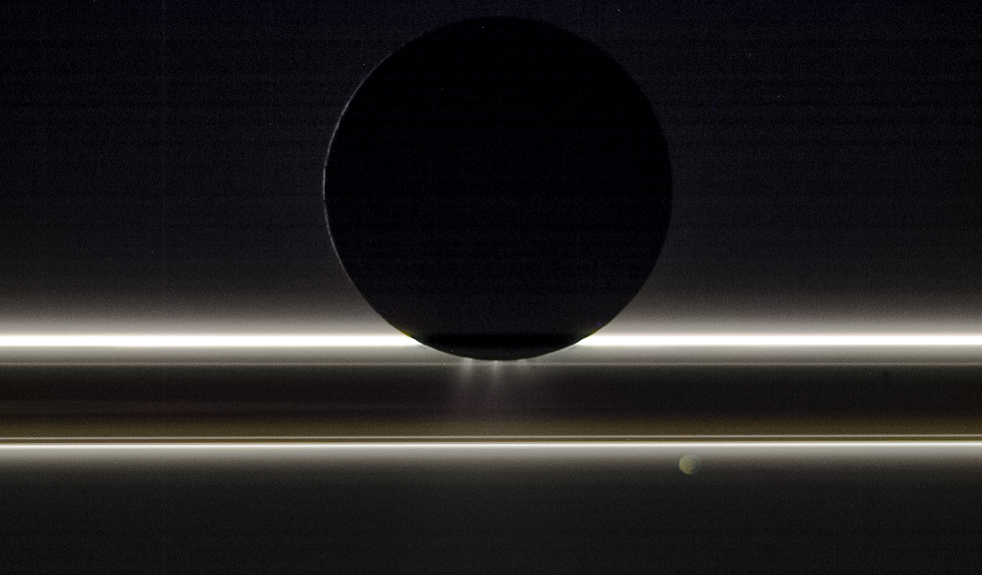 Enceladus in SilhouetteExplanation: One of our Solar System's most tantalizing worlds, Enceladus is backlit by the Sun in this Cassini spacecraft image from November 1, 2009. The dramatic illumination reveals the plumes that continuously spew into space from the south pole of Saturn's 500 kilometer diameter moon. Discovered by Cassini in 2005, the icy plumes are likely connected to an ocean beneath the ice shell of Enceladus. They supply material directly to Saturn's outer, tenuous E ring and make the surface of Enceladus as reflective as snow. Across the scene, Saturn's icy rings scatter sunlight toward Cassini's cameras. Beyond the rings (lower right), the night side of 80 kilometer diameter moon Pandora is faintly lit by Saturnlight. |