|
|

| Title: Astronomy Picture of the Day | |
| friendsoffortiesfive > General > General Discussion | Go to subcategory: |


| Author | Content |
Niceguy2

|
|
|
Date Posted:03/06/2014 11:29 PMCopy HTML I really love this site and |
|
Niceguy2
|
#6276 |
|
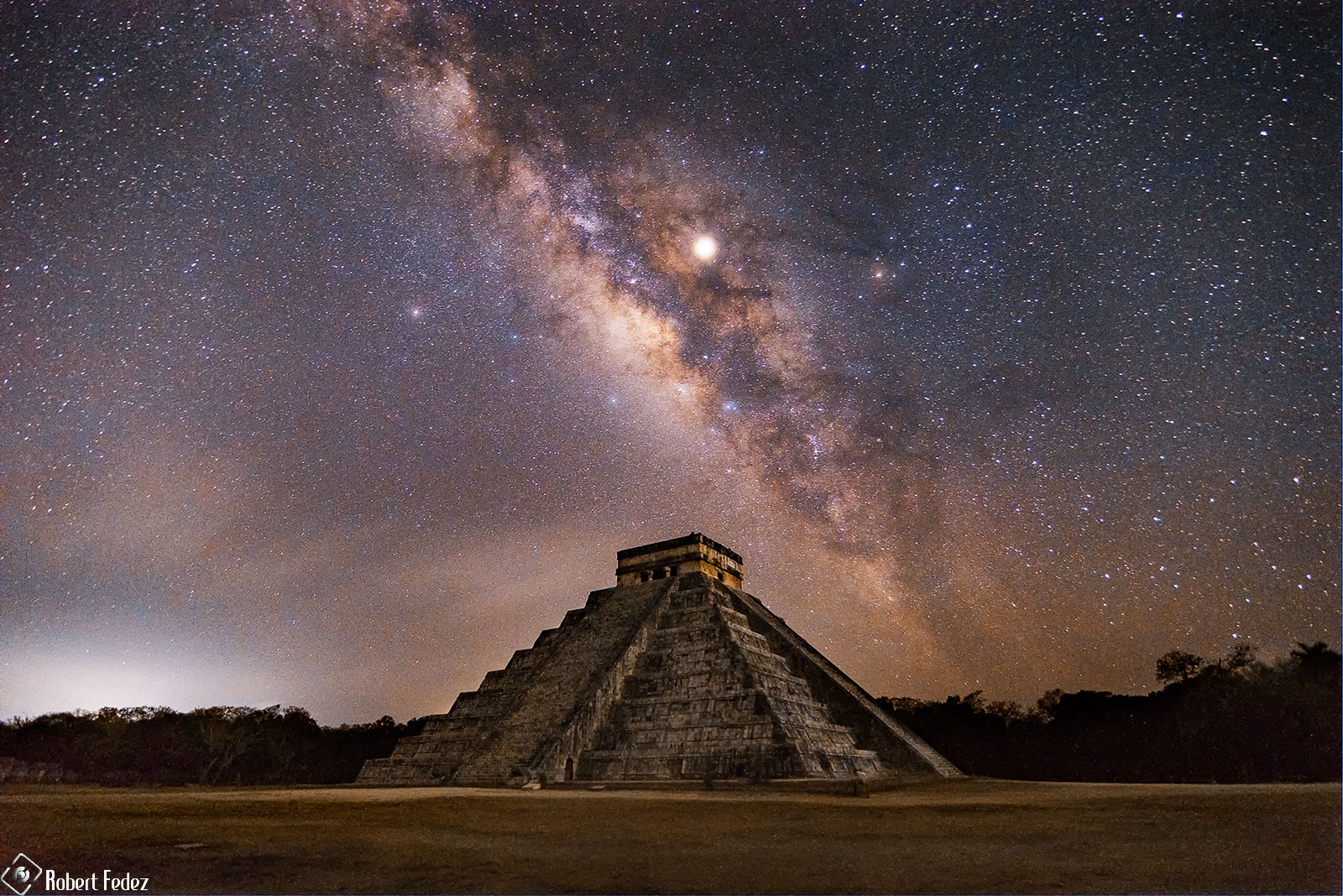
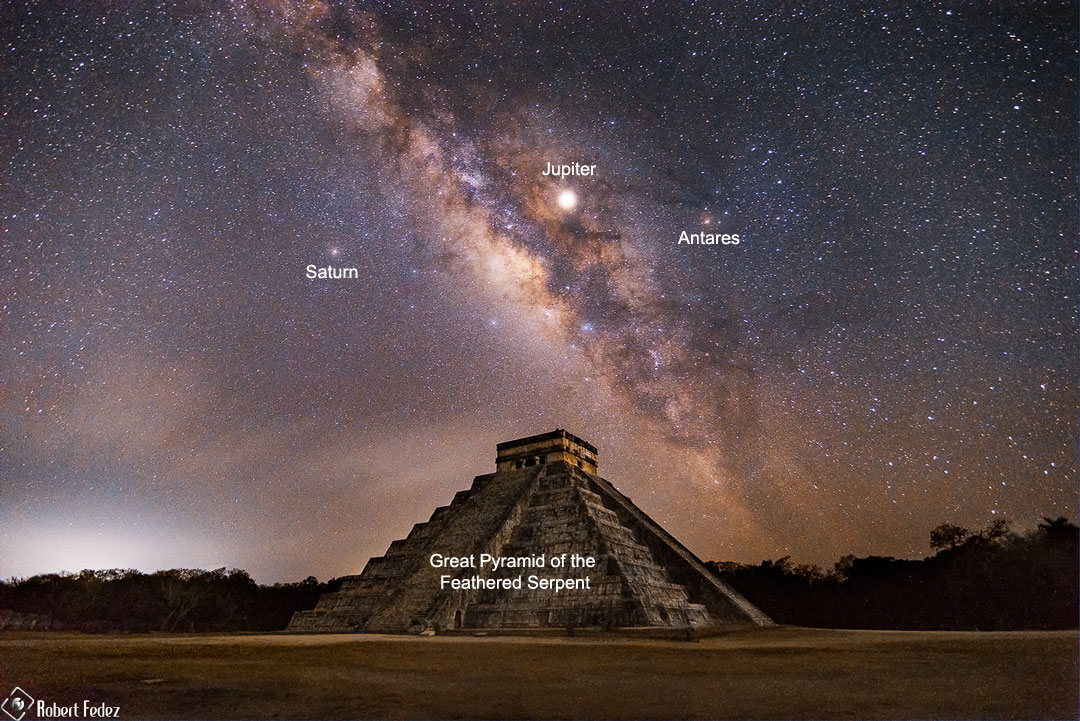
Re:Astronomy Picture of the Day Date Posted:03/16/2026 2:23 AMCopy HTML 2026 March 15 Image Credit & Copyright: Robert Fedez Explanation: To see the feathered serpent descend the Mayan pyramid requires exquisite timing. You must visit El Castillo -- in Mexico's Yucatán Peninsula -- near an equinox. Then, during the late afternoon if the sky is clear, the pyramid's own shadows create triangles that merge into the famous illusion of a slithering viper. Also known as the Temple of Kukulkan, the impressive step-pyramid stands 30 meters tall and 55 meters wide at the base. Built up as a series of square terraces by the pre-Columbian civilization between the 9th and 12th century, the structure can be used as a calendar and is noted for astronomical alignments. The featured composite image was captured in 2019 with Jupiter and Saturn straddling the diagonal central band of our Milky Way galaxy. In a few days another equinox will occur -- not only at Temple of Kukulcán, but all over planet Earth. |
|
Niceguy2
|
#6277 |
|
Re:Astronomy Picture of the Day Date Posted:03/16/2026 2:23 AMCopy HTML
|
|
Niceguy2
|
#6278 |
|
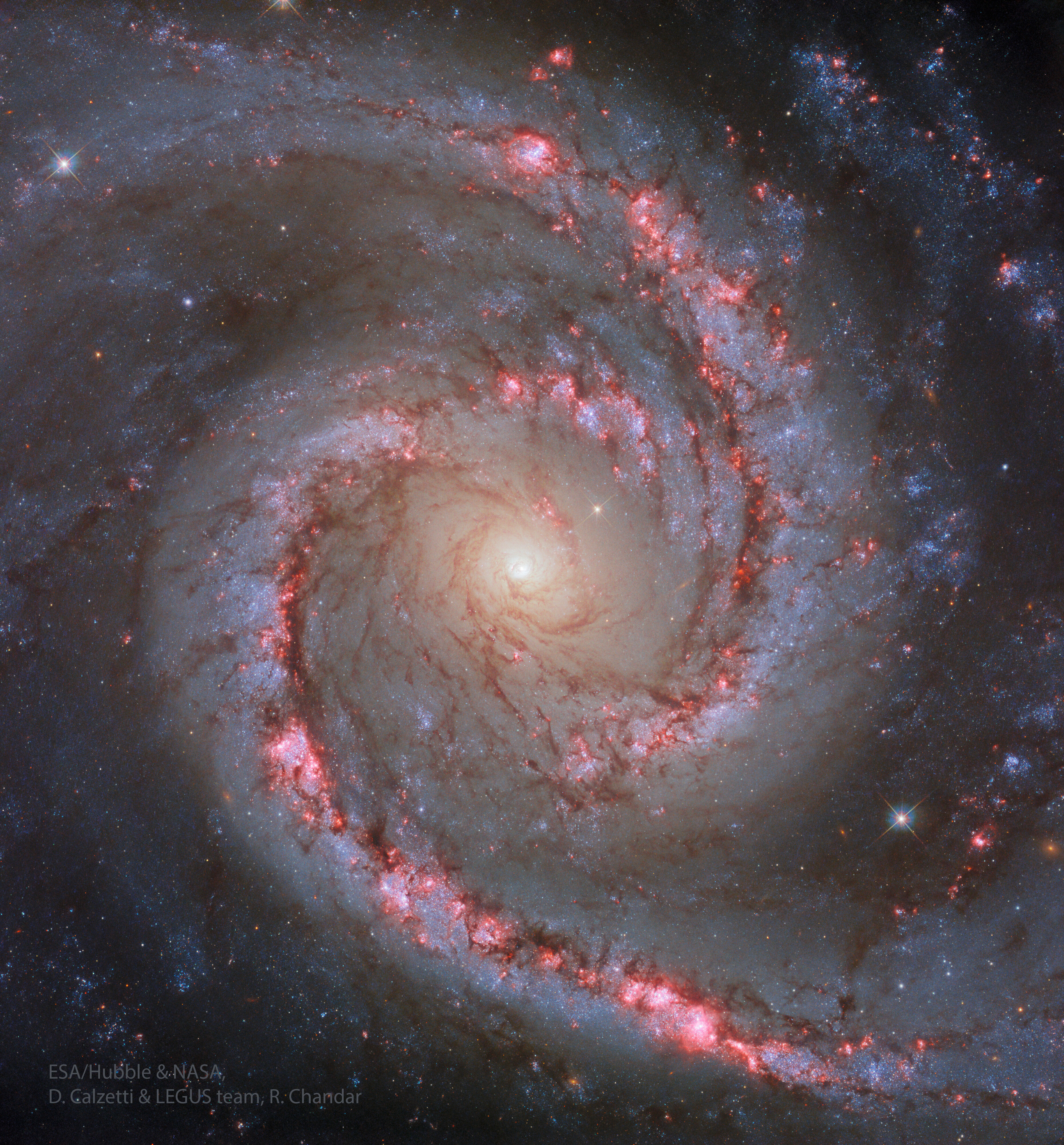
Re:Astronomy Picture of the Day Date Posted:03/17/2026 1:56 AMCopy HTML 2026 March 16 Image Credit: ESA/Hubble & NASA, D. Calzetti & the LEGUS Team, R. Chandar Explanation: If not perfect, then this spiral galaxy is at least one of the most photogenic. An island universe containing billions of stars and situated about 40 million light-years away toward the constellation of the Dolphinfish (Dorado), NGC 1566 presents a gorgeous face-on view. Classified as a grand design spiral, NGC 1566 shows two prominent and graceful spiral arms that are traced by bright blue star clusters, red emission nebulas, and dark cosmic dust lanes. Numerous Hubble Space Telescope images of NGC 1566 have been taken to study star formation, supernovas, and the spiral's unusually active center. NGC 1566's flaring center makes the spiral one of the closest and brightest Seyfert galaxies, likely housing a central supermassive black hole wreaking havoc on surrounding stars and gas. |
|
Niceguy2
|
#6279 |
|
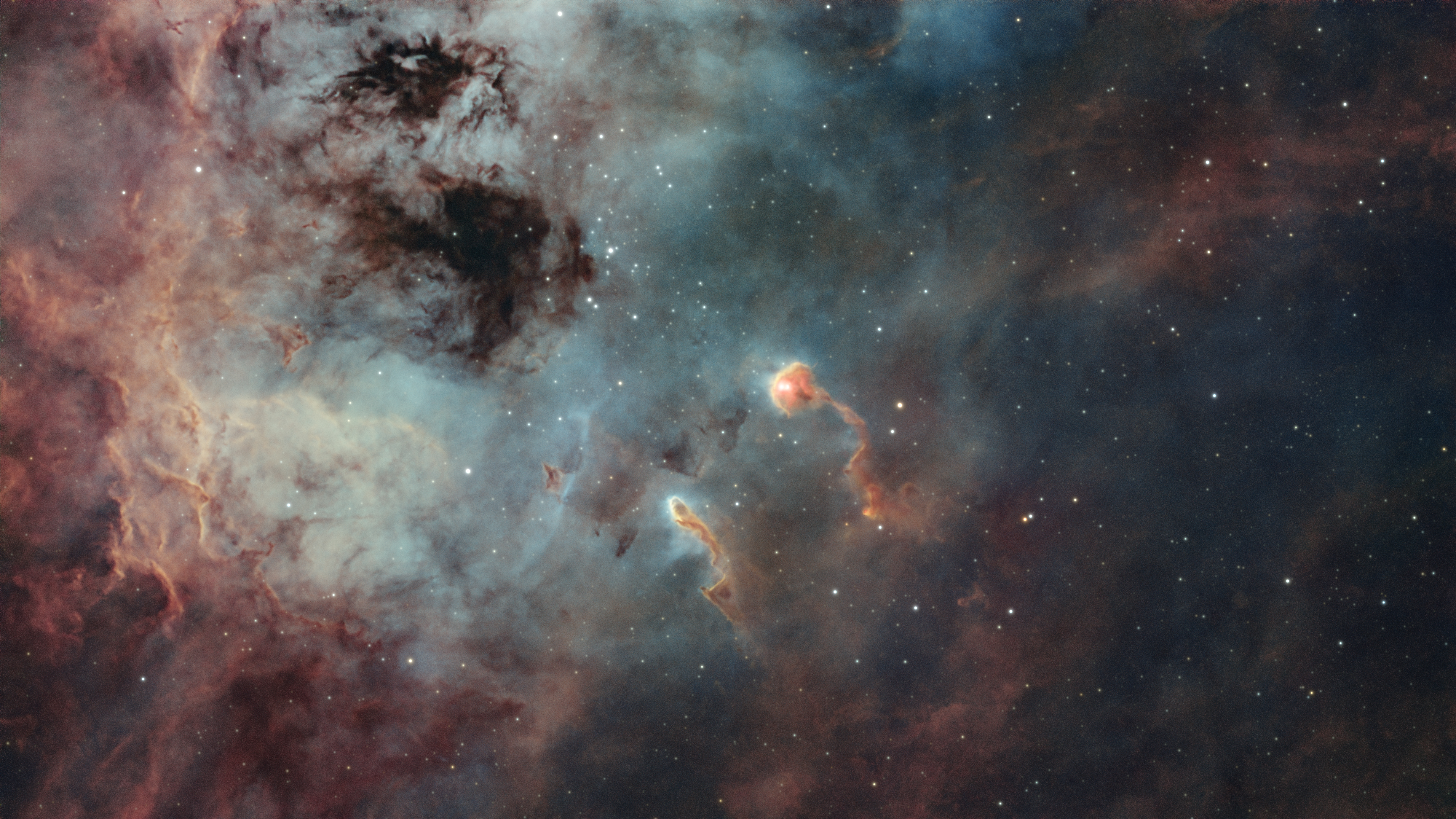
Re:Astronomy Picture of the Day Date Posted:03/18/2026 1:46 AMCopy HTML 2026 March 17 Image Credit & Copyright: Nico Carver Explanation: This telescopic close-up shows off the central regions of otherwise faint emission nebula IC 410, captured under backyard skies. Presented in a Hubble color palette, the image combines visible broadband and narrowband data with data from the near-infrared. Below and right of center are two remarkable inhabitants of the interstellar pond of gas and dust. the Tadpoles of IC 410. Partly obscured by foreground dust, the nebula itself surrounds NGC 1893, a young galactic cluster of stars. Formed in the interstellar cloud a mere 4 million years ago, the intensely hot, bright cluster stars energize the glowing gas. But the cosmic tadpoles themselves are composed of denser cooler gas and dust. Around 10 light-years long they are likely sites of ongoing star formation. Sculpted by stellar winds and radiation their heads are outlined by bright ridges of ionized gas while their tails trail away from the cluster's central young stars. IC 410 lies some 10,000 light-years away, toward the nebula-rich constellation Auriga. |
|
Niceguy2
|
#6280 |
|
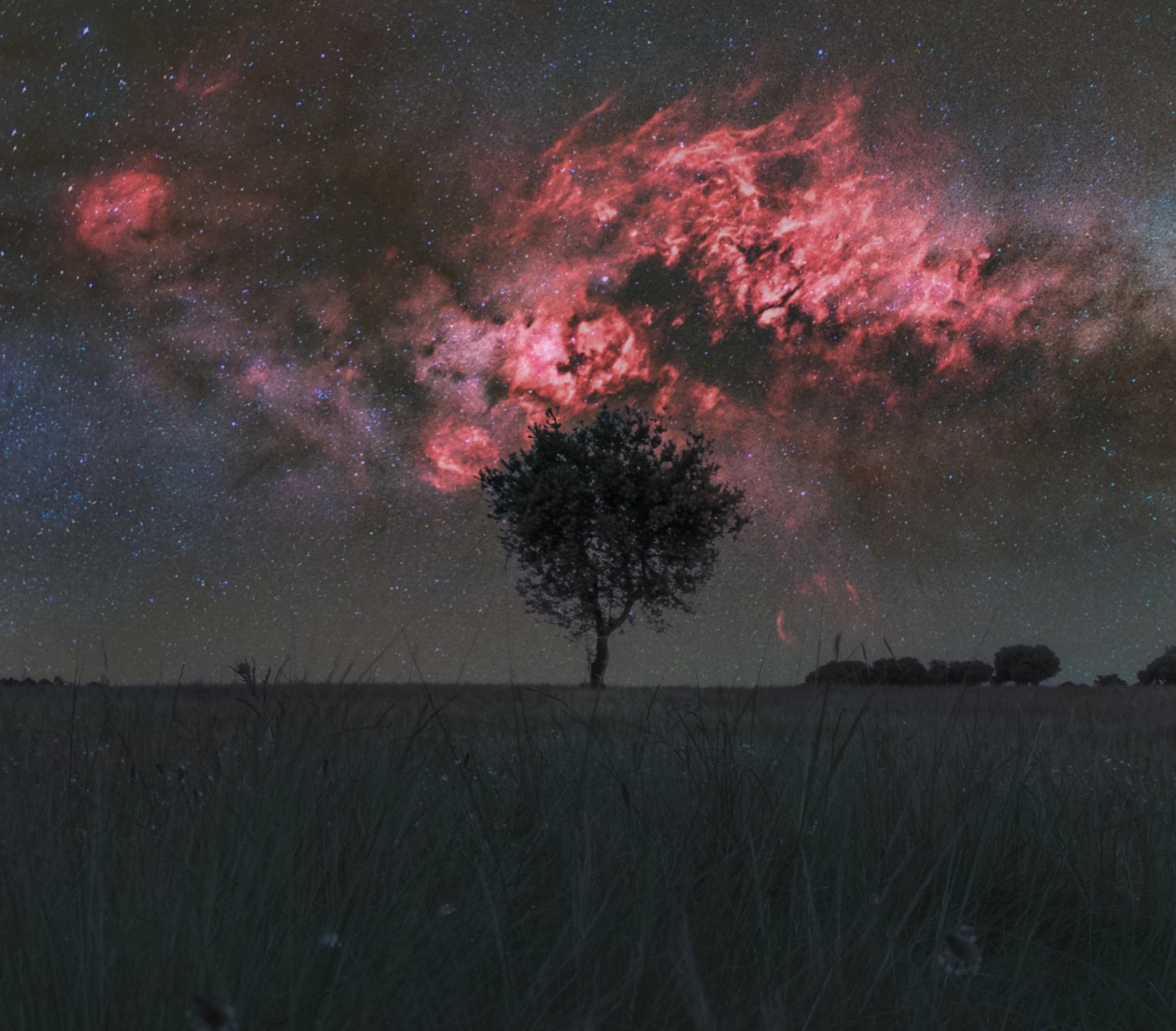
Re:Astronomy Picture of the Day Date Posted:03/19/2026 2:16 AMCopy HTML 2026 March 18 Image Credit & Copyright: 2025 Horacio Lander / AstroHoracio Text: Keighley Rockcliffe (NASA GSFC, UMBC CSST, CRESST II) Explanation: A lone tree stands in a quiet meadow in Guadalajara, Spain, silhouetted against the Cygnus region rising above like flames in the night sky. This deep night skyscape is a composite of exposures that reveals a range of brightness and color human eyes can't quite see on their own. Spanning over a thousand times the angular size of the full moon, Cygnus sets the sky afire with active star formation where clouds of gas and dust collapse under gravity until nuclear fusion ignites and new stars are born. These stars ionize the surrounding hydrogen gas, causing it to glow crimson, while tendrils of interstellar dust absorb some of that light and cast dark shadows across the sky. Cygnus is a trove of celestial treasures, notably the Veil, Crescent, and Pelican nebulae, as well as Cygnus X-1, the first confirmed black hole. Cygnus continues to yield fresh science, including a new three-dimensional model of the Cygnus Loop made possible by the Chandra X-ray Observatory. |
|
Niceguy2
|
#6281 |
|
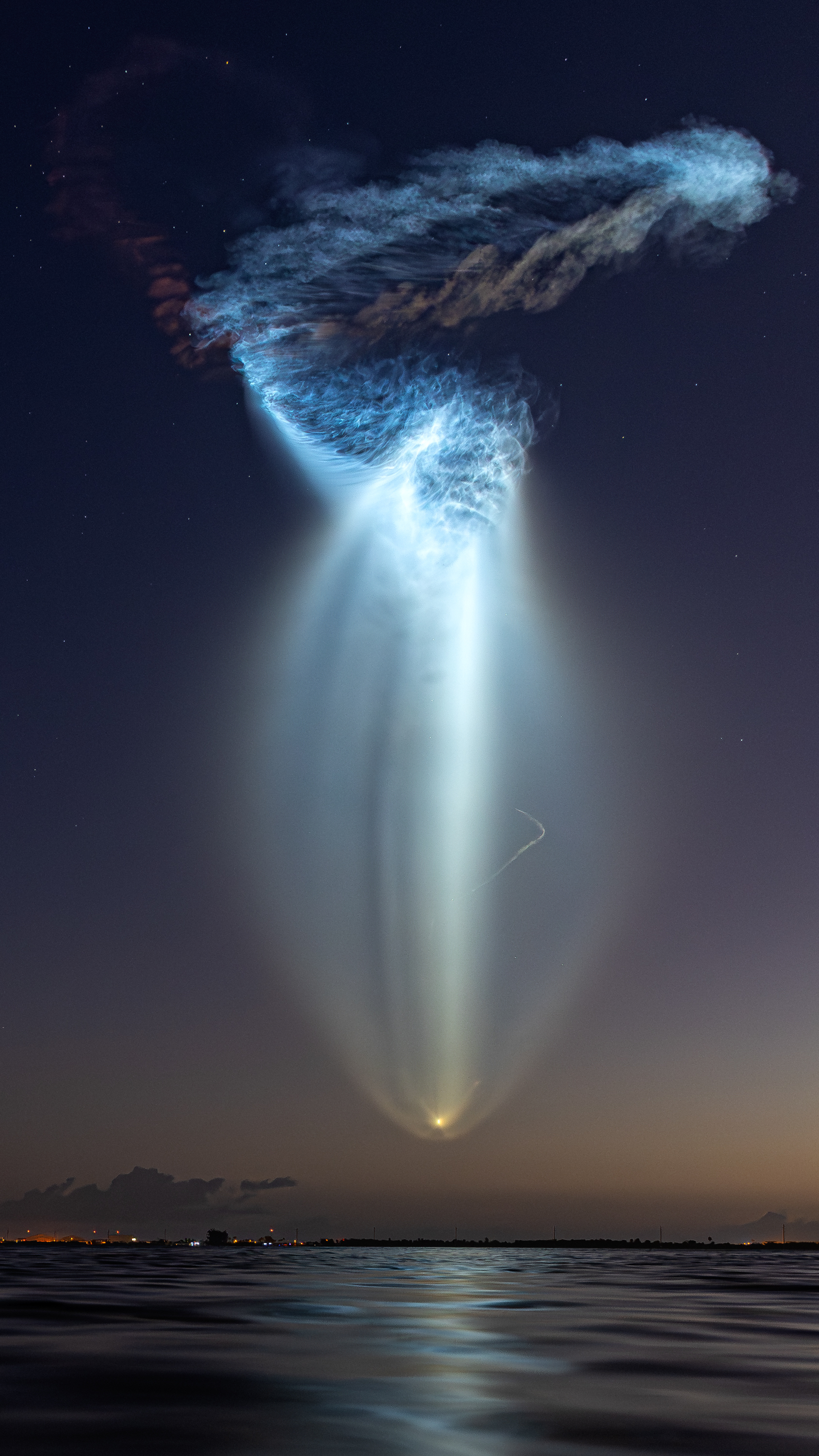
Re:Astronomy Picture of the Day Date Posted:03/20/2026 2:47 AMCopy HTML 2026 March 19 Image Credit & Copyright: Michael Seeley Text: Cecilia Chirenti (NASA GSFC, UMCP, CRESST II) Explanation: Even if you live with your head in the clouds, you won’t find a jellyfish like this one very often. The featured image shows a SpaceX Falcon 9 rocket launch from Cape Canaveral in Florida on March 4. The launch happened 52 minutes before sunrise, and the second stage rocket exhaust plume was high enough in the sky to catch the light of the rising sun, while the photographer was still in the dark. This combination of light and shadow, possible at dawn or dusk, makes the exhaust, mostly water vapor and carbon dioxide, appear as a glowing cloud. It only looks like it's going down, as the rocket follows the curvature of the Earth on its way to space. A related effect is the twilight phenomenon, which causes colorful contrails sometimes mistaken for UFOs. But, in case you are wondering: real jellyfish were sent to space by NASA in the 1990s as part of a science experiment. |
|
Niceguy2
|
#6282 |
|
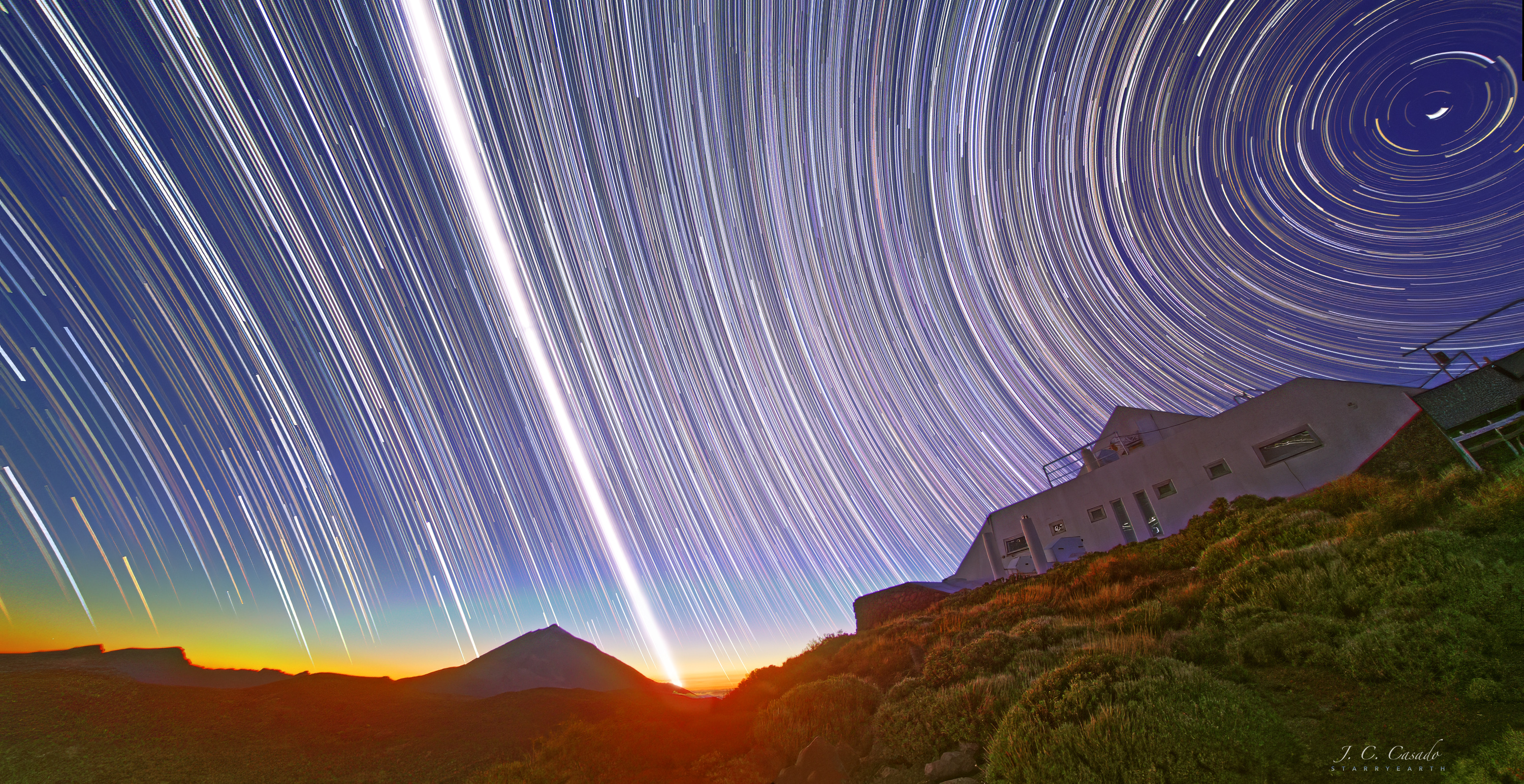
Re:Astronomy Picture of the Day Date Posted:03/21/2026 3:01 AMCopy HTML 2026 March 20 Image Credit & Copyright: Juan Carlos Casado (Starry Earth, TWAN) Explanation: The defining astronomical moment of the equinox today is at 14:46 UTC (March 20). That's when the Sun crosses the celestial equator moving north in its yearly journey through planet Earth's sky, marking the beginning of spring for our fair planet in the northern hemisphere and fall in the southern hemisphere. Then, day and night are nearly equal around the globe. In fact, both day and nighttime exposures from a spring equinox at the Observatorio del Teide in Tenerife, Canary Islands, Spain, are used in this composited skyscape. Over 1,000 images were taken with a fisheye lens and merged in the ambitious equinox project. The apparent motion of the Sun setting along the celestial equator on the equinox date follows the bright linear, diagonal track from the sequence of daytime exposures taken over 6 hours. After sunset, nighttime exposures recorded startrails, with the celestial equator as a linear track and concentric arcs circling the north celestial pole near Polaris at upper right and the south celestial pole beyond the lower left edge (and below the Teide horizon). The foreground includes the distant Teide volcano peak and the observatory's pyramid-shaped solar laboratory building. |
|
Niceguy2
|
#6283 |
|
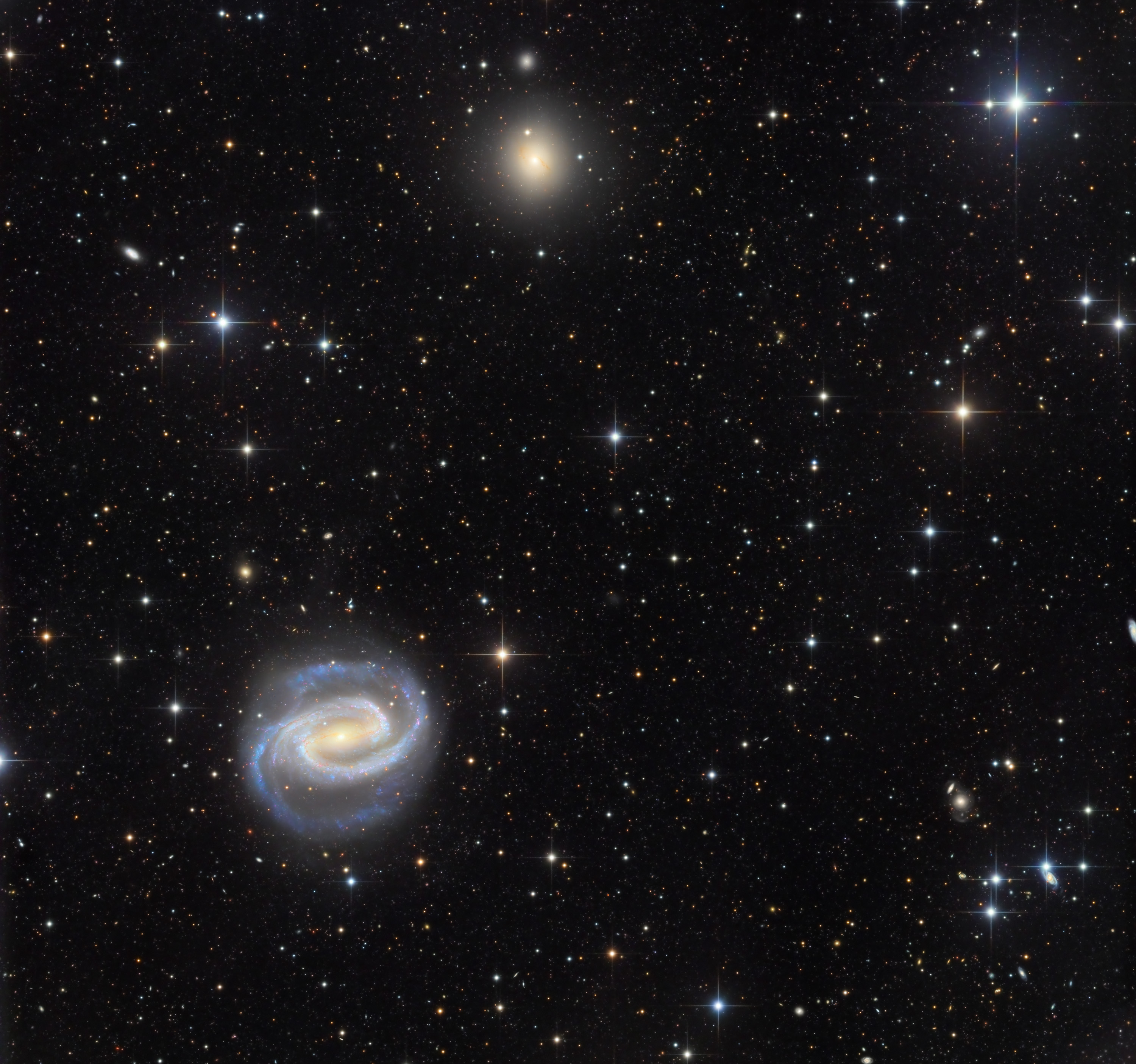
Re:Astronomy Picture of the Day Date Posted:03/22/2026 1:16 AMCopy HTML 2026 March 21 Image Credit & Copyright: Dietmar Hager and Eric Benson Explanation: Spiral NGC 1300 and elliptical NGC 1297 are galaxies that lie on the banks of the southern constellation Eridanus (The River). At 70 million light-years distant or more, both are members of the Eridanus Galaxy Cluster. About 100,000 light-years across, at lower left in this sharp, galaxy group photo NGC 1300 is seen face-on with a prominent central bar and grand, sweeping spiral arms. Like other spiral galaxies, including our own barred spiral Milky Way Galaxy, NGC 1300 is thought to have a supermassive central black hole. A contrast in appearance and slightly more distant, NGC 1297 is the roughly spherical large elliptical galaxy near the top of the frame. With little active star formation, elliptical galaxies are composed of older populations of stars and are likely he result of multiple collisions and mergers with spirals. |
|
Niceguy2
|
#6284 |
|
Re:Astronomy Picture of the Day Date Posted:03/23/2026 1:38 AMCopy HTML 2018 February 28 Image Credit: NASA, ESA, Hubble, S. Smartt (QUB); Acknowledgement: Robert Gendler; Insets: Victor Buso Explanation: Where did that spot come from? Amateur astronomer Victor Buso was testing out a new camera on his telescope in 2016 when he noticed a curious spot of light appear -- and remain. After reporting this unusual observation, this spot was determined to be light from a supernova just as it was becoming visible -- in an earlier stage than had ever been photographed optically before. The discovery before and after images, taken about an hour apart, are shown in the inset of a more detailed image of the same spiral galaxy, NGC 613, taken by the Hubble Space Telescope. Follow-up observations show that SN 2016gkg was likely the explosion of a supergiant star, and Buso likely captured the stage where the outgoing detonation wave from the stellar core broke through the star's surface. Since astronomers have spent years monitoring galaxies for supernovas without seeing such a "break out" event, the odds of Buso capturing this have been compared to winning a lottery. |