|
|

| Title: Astronomy Picture of the Day | |
| friendsoffortiesfive > General > General Discussion | Go to subcategory: |


| Author | Content |
Niceguy2

|
|
|
Date Posted:03/06/2014 11:29 PMCopy HTML I really love this site and |
|
Niceguy2
|
#6251 |
|
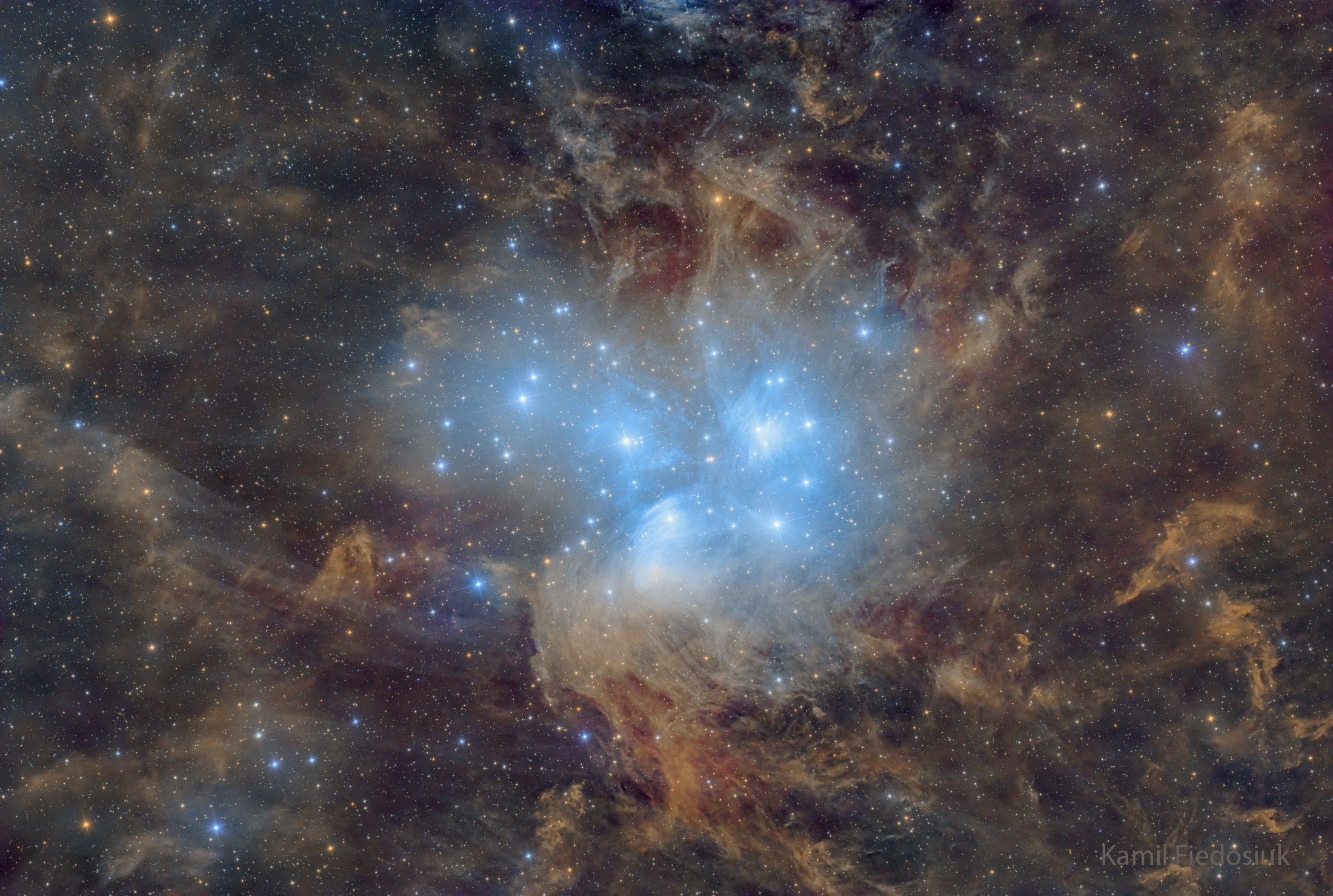
Re:Astronomy Picture of the Day Date Posted:02/24/2026 3:54 AMCopy HTML 2026 February 23 Image Credit & Copyright: Kamil Fiedosiuk Explanation: Have you ever seen the Pleiades star cluster? Even if you have, you probably have never seen it as large and clear as this. Perhaps the most famous star cluster on the sky, the bright stars of the Pleiades can be seen with the unaided eye even from the depths of a light-polluted city. With a long exposure from a dark location, though, the dust cloud surrounding the Pleiades star cluster becomes very evident. The featured 18-hour exposure, taken from Bory Tucholskie, Poland covers a sky area several times the size of the full moon. Also known as the Seven Sisters and M45, the Pleiades lies about 400 light years away toward the constellation of the Bull (Taurus). A common legend with a modern twist is that one of the brighter stars faded since the cluster was named, leaving only six of the sister stars visible to the unaided eye. The actual number of Pleiades stars visible, however, may be more or less than seven, depending on the darkness of the surrounding sky and the clarity of the observer's eyesight. |
|
Niceguy2
|
#6252 |
|
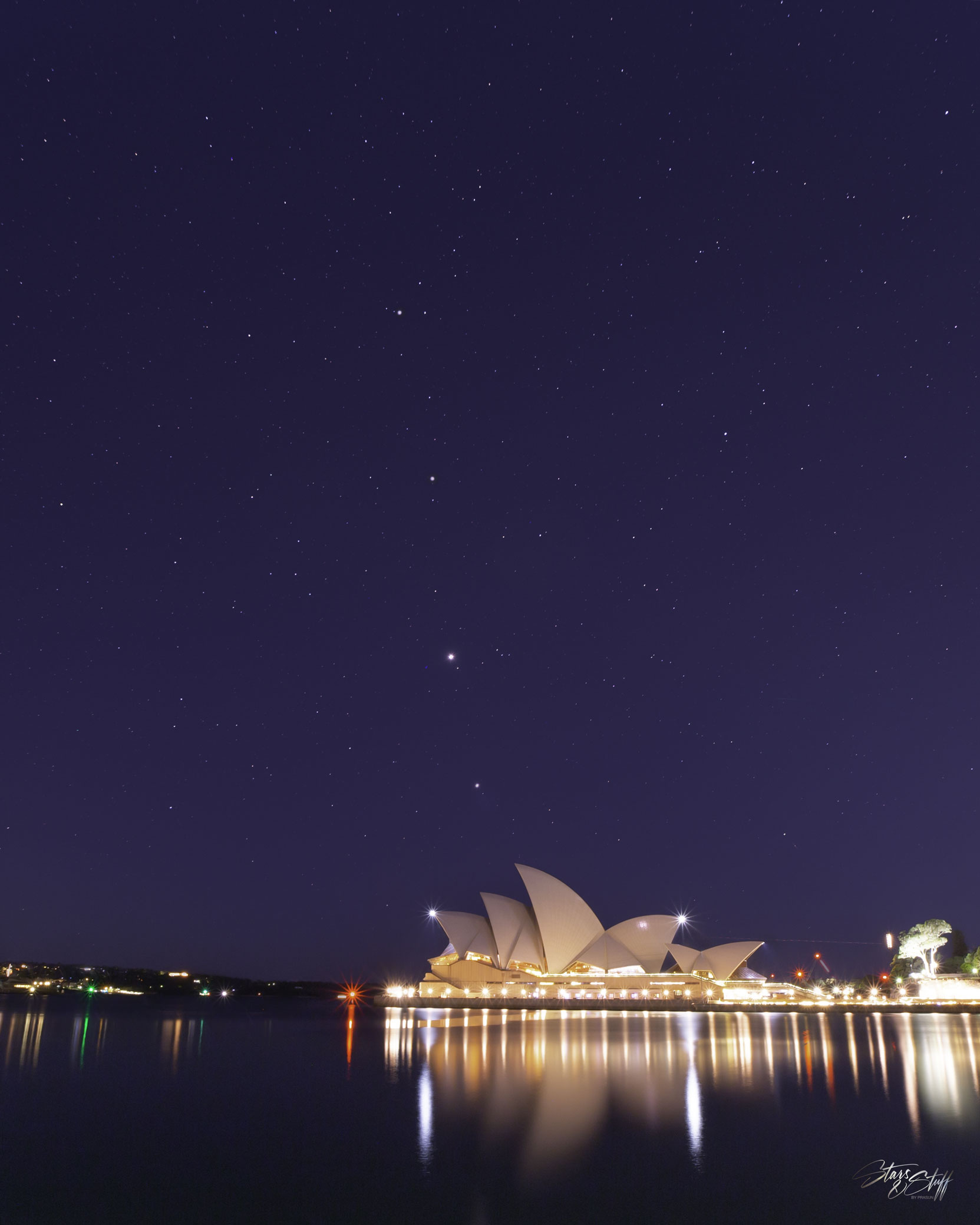
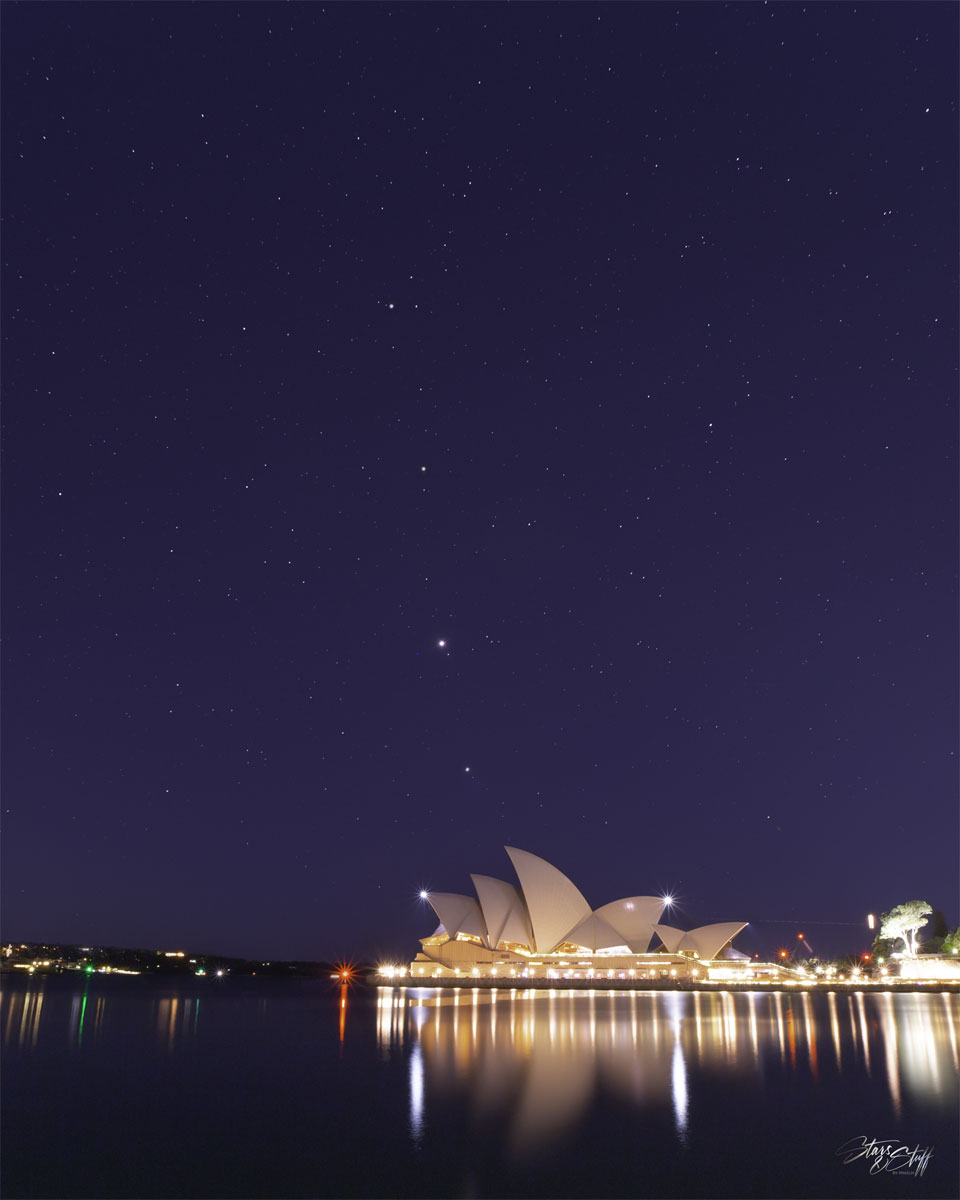
Re:Astronomy Picture of the Day Date Posted:02/25/2026 3:30 AMCopy HTML 2026 February 24 Image Credit & Copyright: Prasun Agrawal Explanation: Look up this week and see a whole bunch of planets. Just after sunset, looking west (mostly), planets Mercury, Venus, Saturn, and Jupiter will all be visible to the unaided eye simultaneously. If you have a telescope, planets Uranus and Neptune can also be seen. In order up from the horizon, the lineup this week will be Venus (the brightest), Mercury, Saturn, Neptune, Uranus, and Jupiter (second brightest). It doesn't matter where on Earth you live because this early evening planet parade will be visible through clear skies all around the globe. The planets will appear to be nearly in a line because they all orbit the Sun in nearly the same plane: the ecliptic. The featured image shows a similar planet parade that occurred in 2022, captured over the Sydney Opera House in southern Australia. Although visible all week, the planets will be most easily seen together this weekend. |
|
Niceguy2
|
#6253 |
|
Re:Astronomy Picture of the Day Date Posted:02/25/2026 3:30 AMCopy HTML
|
|
Niceguy2
|
#6254 |
|
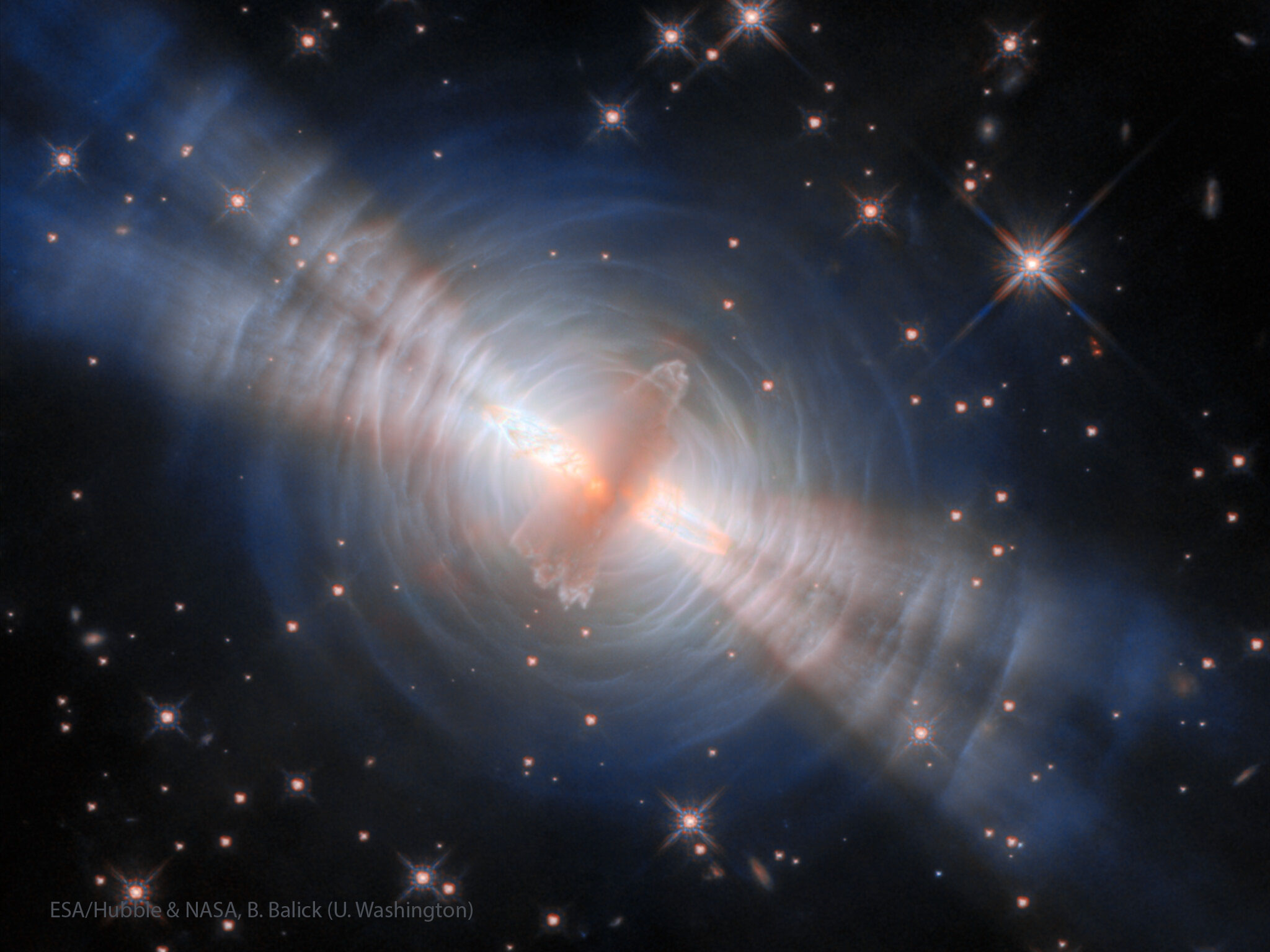
Re:Astronomy Picture of the Day Date Posted:02/26/2026 4:39 AMCopy HTML 2026 February 25 Image Credit & Copyright: ESA/Hubble & NASA, B. Balick (U. Washington) Explanation: Ever wonder what it would look like to crack open the Sun? The Egg Nebula, a dying Sun-like star, can unscramble this question. Pictured is a combination of several visible and infrared images of the nebula (also known as RAFGL 2688 or CRL 2688) taken with the Hubble Space Telescope. The star has shed its outer layers, and a bright, hot core (or "yolk") now illuminates the milky "egg white" shells of gas and dust surrounding the center. The central lobes and rings are structures of gas and dust recently ejected into space, with the dust being dense enough to block our view of the stellar core. Light beams emanate from that blocked core, escaping through holes carved in the older ejected material by newer, faster jets expelled from the star’s poles. Astronomers are still trying to figure out what causes the disks, lobes, and jets during this short (only a few thousand years!) phase of the star’s evolution, making this an egg-cellent image to study! |
|
Niceguy2
|
#6255 |
|
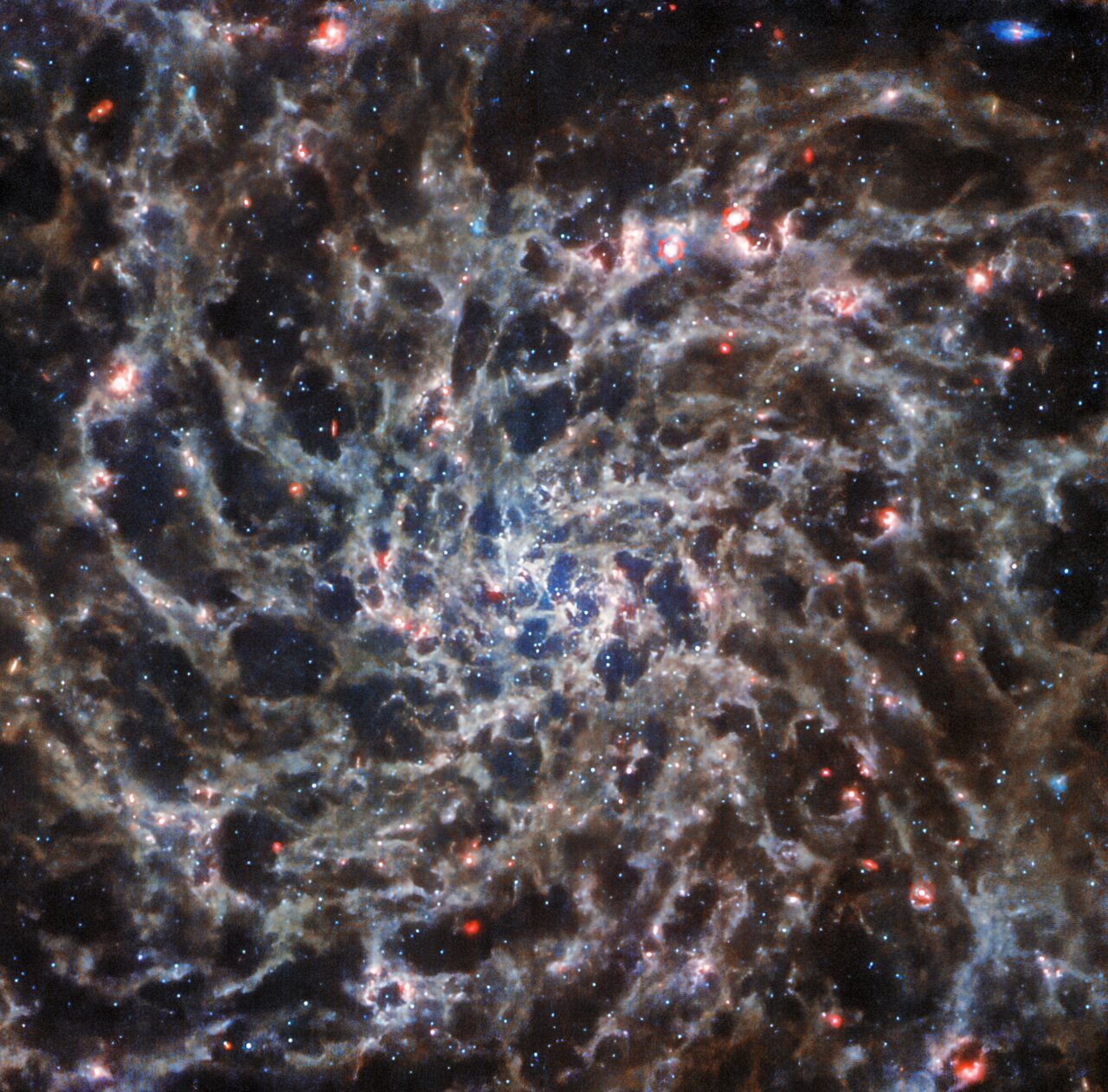
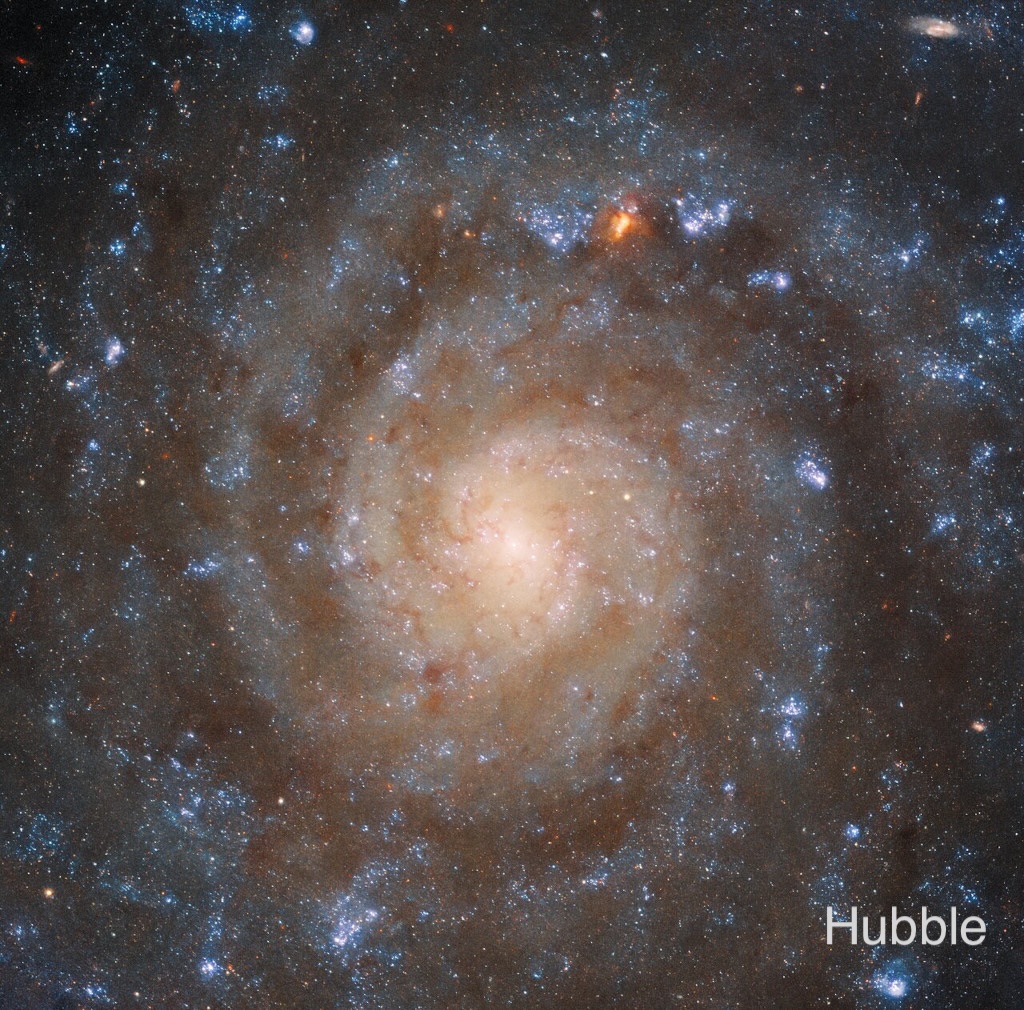
Re:Astronomy Picture of the Day Date Posted:02/27/2026 3:12 AMCopy HTML 2026 February 26 Image Credit: ESA/Webb, NASA, CSA, J. Lee and the PHANGS-JWST and PHANGS-HST Teams Text: Cecilia Chirenti (NASA GSFC, UMCP, CRESST II) Explanation: What does the universe look like through infrared goggles? Our eyes can only see visible light, but astronomers want to see more. Today’s APOD shows spiral galaxy IC 5332 as seen by two NASA telescopes: Webb in mid-infrared and Hubble in ultraviolet and visible light. To toggle between the two space-based views just slide your cursor over the image (or follow this link). The Hubble image highlights the spiral arms of the galaxy separated by dark regions, whereas the Webb image reveals a finer, more tangled structure. Interstellar dust scatters and absorbs light from the stars in the galaxy, causing the dark dust lanes in the Hubble image, and then emits heat in infrared light, so dust glows in this Webb image. The Mid-InfraRed Instrument on Webb needs to operate at a chilling temperature of -266ºC (or - 447ºF), otherwise it would detect infrared radiation from the telescope itself. Combining these observations, astronomers connect the “small scale” of gas and stars to the truly large scale of galactic structure and evolution. |
|
Niceguy2
|
#6256 |
|
Re:Astronomy Picture of the Day Date Posted:02/27/2026 3:12 AMCopy HTML
|