|
 AimooHelpForum
Aimoo Forum List |
Ticket |
Today |
Member |
Search |
Who's On |
Chat Room | Photos | Help |
Sign In |
AimooHelpForum
Aimoo Forum List |
Ticket |
Today |
Member |
Search |
Who's On |
Chat Room | Photos | Help |
Sign In |
 |
|

| Title: Astronomy Picture of the Day | |
| friendsoffortiesfive > General > General Discussion | Go to subcategory: |


| Author | Content |
Niceguy2

|
|
|
Date Posted:03/06/2014 11:29 PMCopy HTML I really love this site and |
|
Niceguy2
|
#6176 |
|
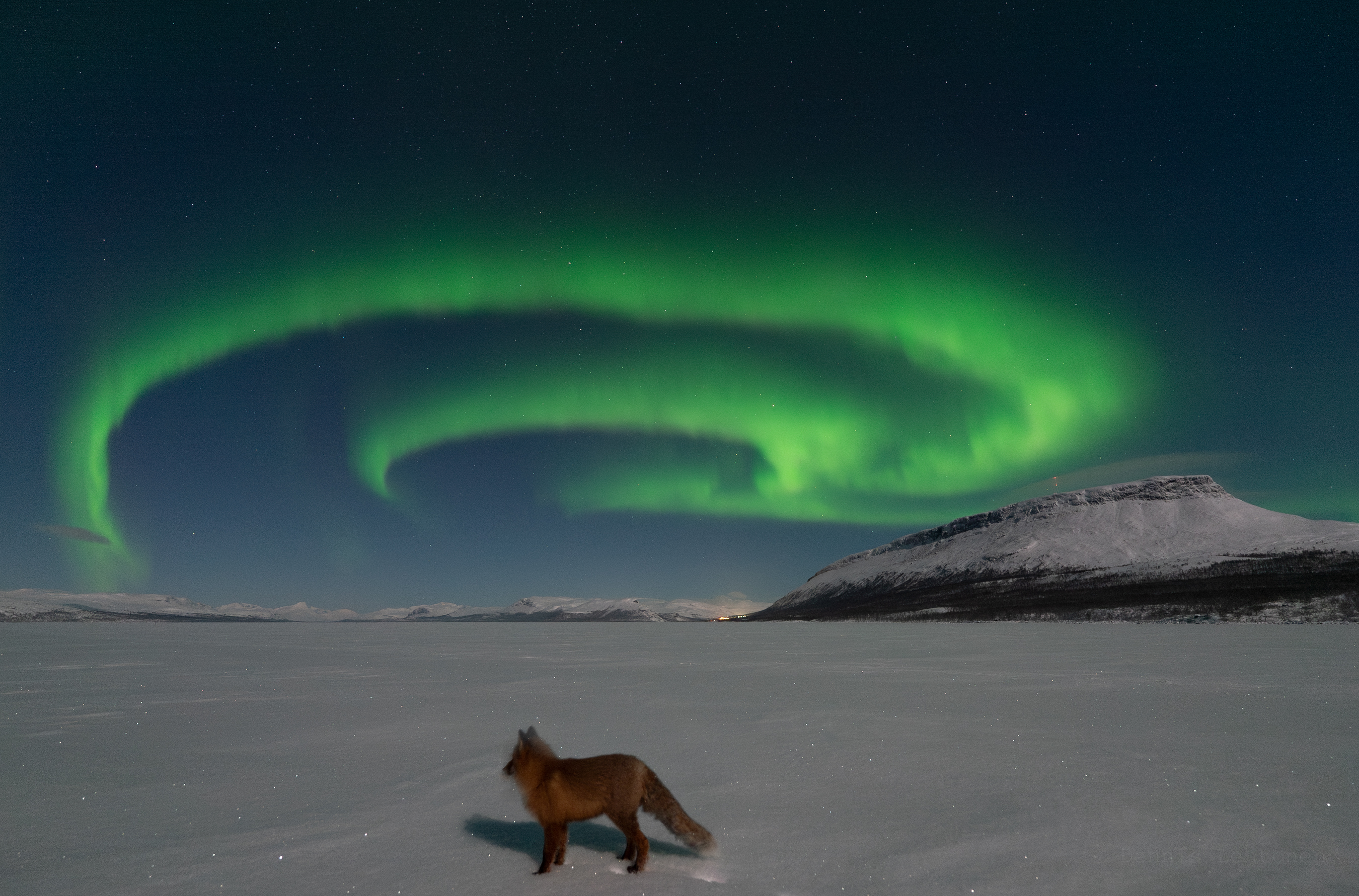
Re:Astronomy Picture of the Day Date Posted:12/13/2025 3:59 AMCopy HTML 2025 December 12 Image Credit & Copyright: Dennis Lehtonen Explanation: In a Finnish myth, when an arctic fox runs so fast that its bushy tail brushes the mountains, flaming sparks are cast into the heavens creating the northern lights. In fact the Finnish word "revontulet", a name for the aurora borealis or northern lights, can be translated as fire fox. So that evocative myth took on a special significance for the photographer of this northern night skyscape from Finnish Lapland near Kilpisjarvi Lake. The snowy scene is illuminated by moonlight. Saana, an iconic fell or mountain of Lapland, rises at the right in the background. But as the beautiful nothern lights danced overhead, the wild fire fox in the foreground enthusiastically ran around the photographer and his equipment, making it difficult to capture in this lucky single shot. |
|
Niceguy2
|
#6177 |
|
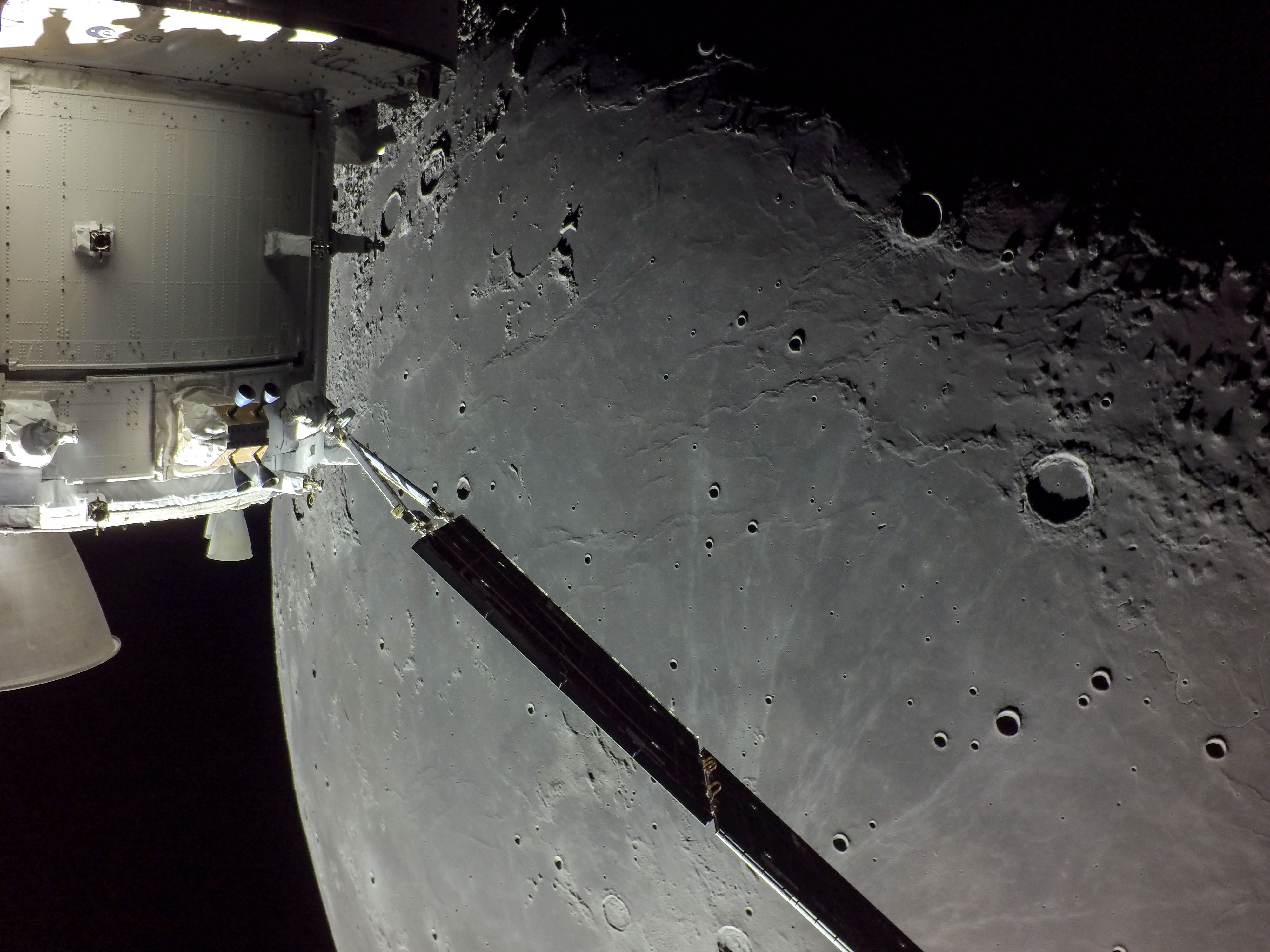
Re:Astronomy Picture of the Day Date Posted:12/14/2025 3:37 AMCopy HTML 2025 December 13 Image Credit: NASA, Artemis 1 Explanation: On December 5, 2022, a camera on board the uncrewed Orion spacecraft captured this view as Orion approached its return powered flyby of the Moon. Beyond one of Orion's extended solar arrays lies dark, smooth, terrain along the western edge of the Oceanus Procellarum. Prominent on the lunar nearside Oceanus Procellarum, the Ocean of Storms, is the largest of the Moon's lava-flooded maria. The lunar terminator, the shadow line between lunar night and day, runs along the left of this frame. The 41 kilometer diameter crater Marius is top center, with ray crater Kepler peeking in at the edge, just right of the solar array wing. Kepler's bright rays extend to the north and west, reaching the dark-floored Marius. By December 11, 2022 the Orion spacecraft had returned to its home world. The historic Artemis 1 mission ended with Orion's successful splashdown in planet Earth's water-flooded Pacific Ocean. |
|
Niceguy2
|
#6178 |
|
Re:Astronomy Picture of the Day Date Posted:12/15/2025 2:08 AMCopy HTML 2025 December 14 Video Credit: NASA, JPL-Caltech, SWRI, MSSS; Animation: Koji Kuramura, Gerald Eichstädt, Mike Stetson; Music: Vangelis Explanation: What would it be like to fly over the largest moon in the Solar System? In 2021, the robotic Juno spacecraft flew past Jupiter's huge moon Ganymede and took images that have been digitally constructed into a detailed flyby. As the featured video begins, Juno swoops over the two-toned surface of the 5,000-km wide moon, revealing an icy alien landscape filled with grooves and craters. The grooves are likely caused by shifting surface plates, while the craters are caused by violent impacts. Continuing on in its orbit, Juno then performed its 34th close pass over Jupiter's clouds. The digitally-constructed video shows numerous swirling clouds in the north, colorful planet-circling zones and bands across the middle -- featuring several white-oval clouds from the String of Pearls, and finally more swirling clouds in the south. |
|
Niceguy2
|
#6179 |
|
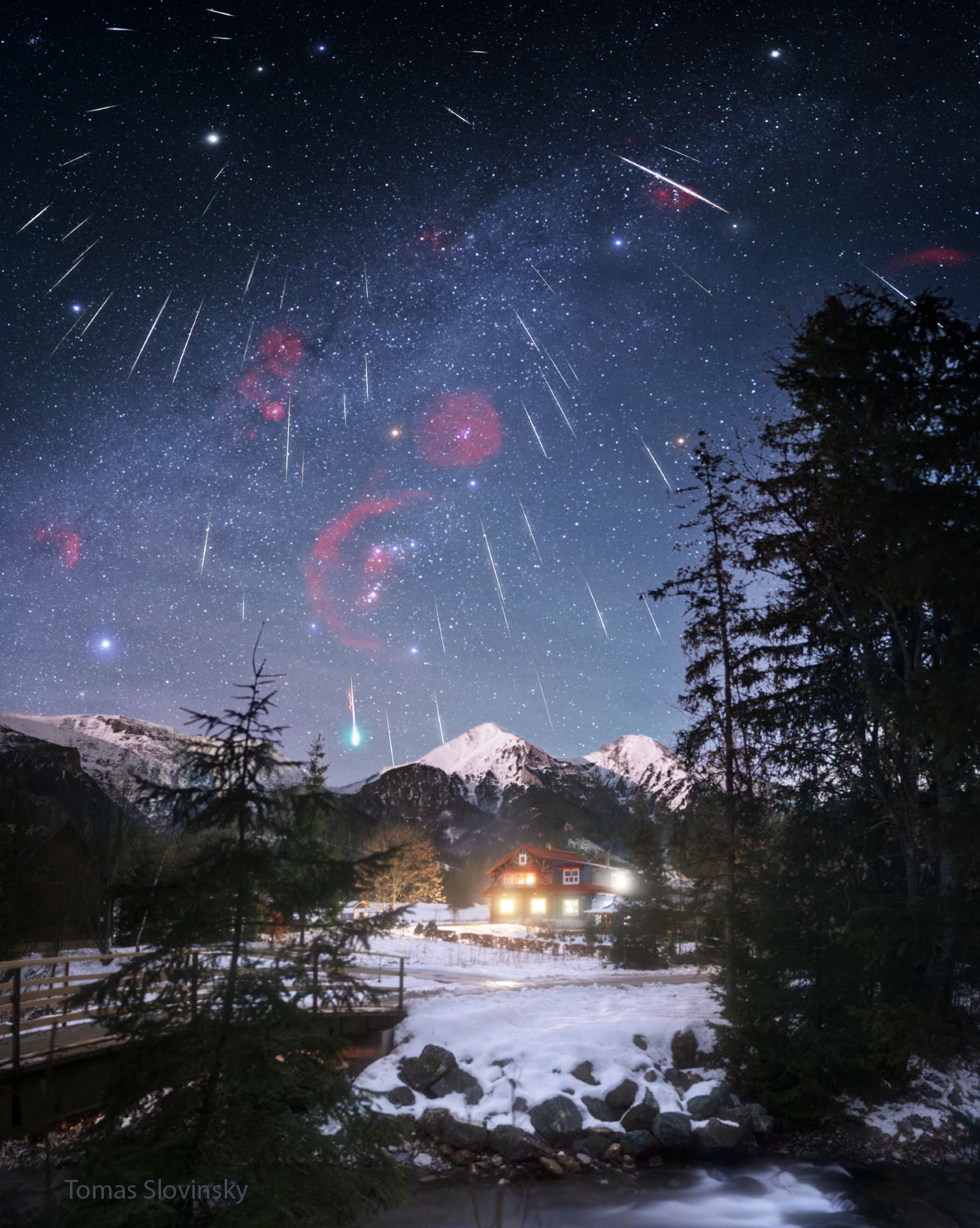
Re:Astronomy Picture of the Day Date Posted:12/16/2025 2:50 AMCopy HTML 2025 December 15 Image Credit & Copyright: Tomáš Slovinský Explanation: Where are all of these meteors coming from? In terms of direction on the sky, the pointed answer is the constellation of Gemini. That is why the major meteor shower in December is known as the Geminids -- because shower meteors all appear to come from a radiant toward Gemini. Three dimensionally, however, sand-sized debris expelled from the unusual asteroid 3200 Phaethon follows a well-defined orbit about our Sun, and the part of the orbit that approaches Earth is superposed in front of the constellation of Gemini. Therefore, when Earth crosses this orbit, the radiant point of falling debris appears in Gemini. Featured here is a composite of many images taken over the past few days through dark skies from Slovakia and capturing the snow-covered peaks of the Belianske Tatra mountains Numerous bright meteor streaks from the Geminids meteor shower are visible. Orion is visible above the horizon, while the bright star nearest the radiant is Castor. |
|
Niceguy2
|
#6180 |
|
Re:Astronomy Picture of the Day Date Posted:12/17/2025 2:49 AMCopy HTML 2025 December 16 Image Credit & Copyright: JJ Rao Explanation: What’s happening over that tree? Two very different things. On the left is the Andromeda galaxy, an object that is older than humanity and will last billions of years into the future. Andromeda (M31) is similar in size and shape to our own Milky Way Galaxy. On the right is a red sprite, a type of lightning that lasts a fraction of a second and occurs above violent thunderstorms. Red sprites were verified as real atmospheric phenomena only about 35 years ago. The tree in the center is a boab, which may live for as long as a thousand years. Boab trees grow naturally in Australia and Africa and are known for being able to store large amounts of water: up to 100,000 liters. The featured image was captured last month near Derby in Western Australia. |
|
Niceguy2
|
#6181 |
|
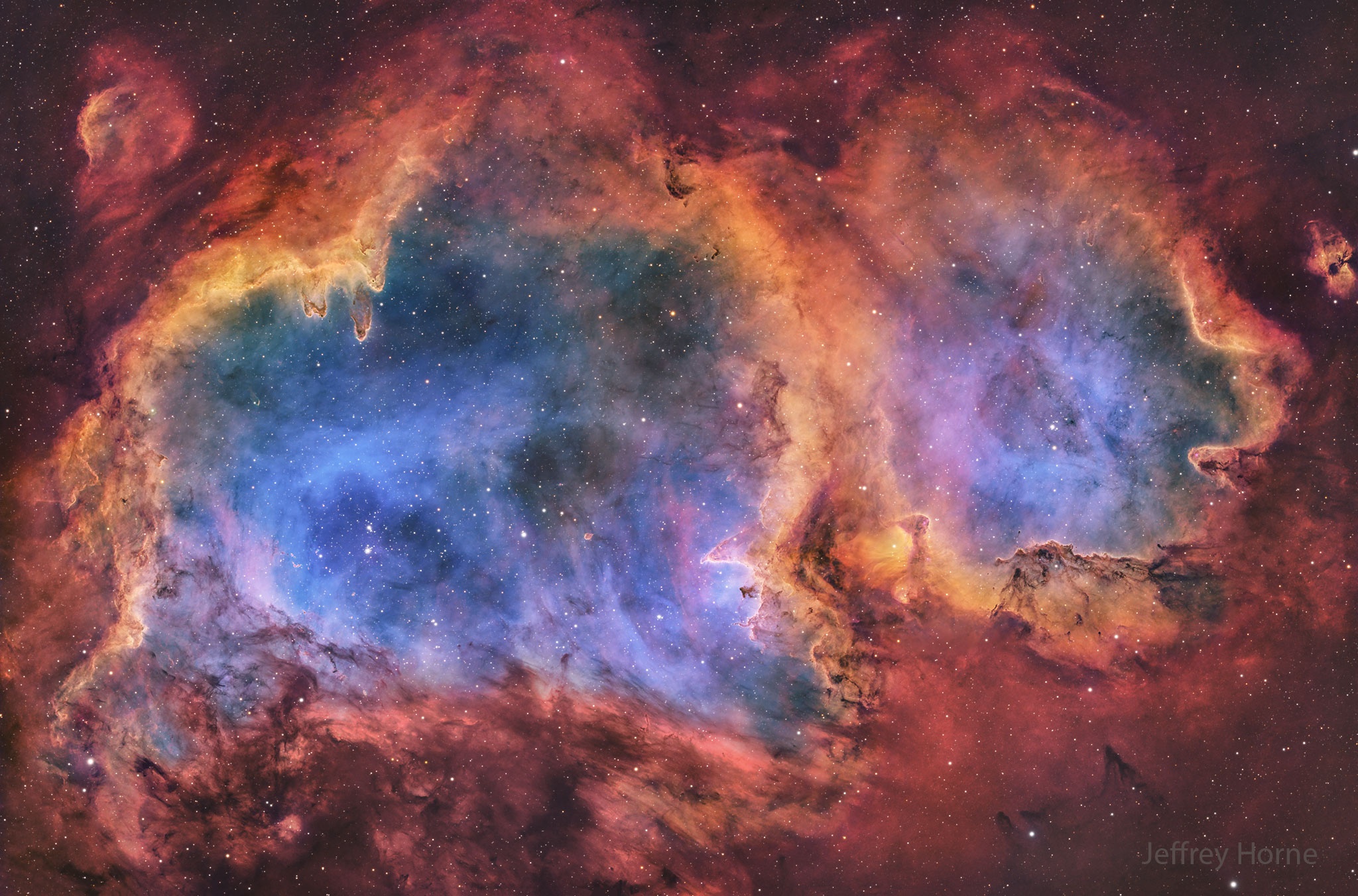
Re:Astronomy Picture of the Day Date Posted:12/18/2025 3:11 AMCopy HTML 2025 December 17 Image Credit & Copyright: Jeffrey Horne Explanation: Stars are forming in the Soul of the Queen of Aethopia. More specifically, a large star forming region called the Soul Nebula can be found in the direction of the constellation Cassiopeia, whom Greek mythology credits as the vain wife of a King who long ago ruled lands surrounding the upper Nile river. Also known as Westerhout 5 (W5), the Soul Nebula houses several open clusters of stars, ridges and pillars darkened by cosmic dust, and huge evacuated bubbles formed by the winds of young massive stars. Located about 6,500 light years away, the Soul Nebula spans about 100 light years and is usually imaged next to its celestial neighbor the Heart Nebula (IC 1805). The featured image, taken from near Nashville, Tennessee, USA, is a composite of 234 hours of exposures made in different colors: red as emitted by hydrogen gas, yellow as emitted by sulfur, and blue as emitted by oxygen. |
|
Niceguy2
|
#6182 |
|
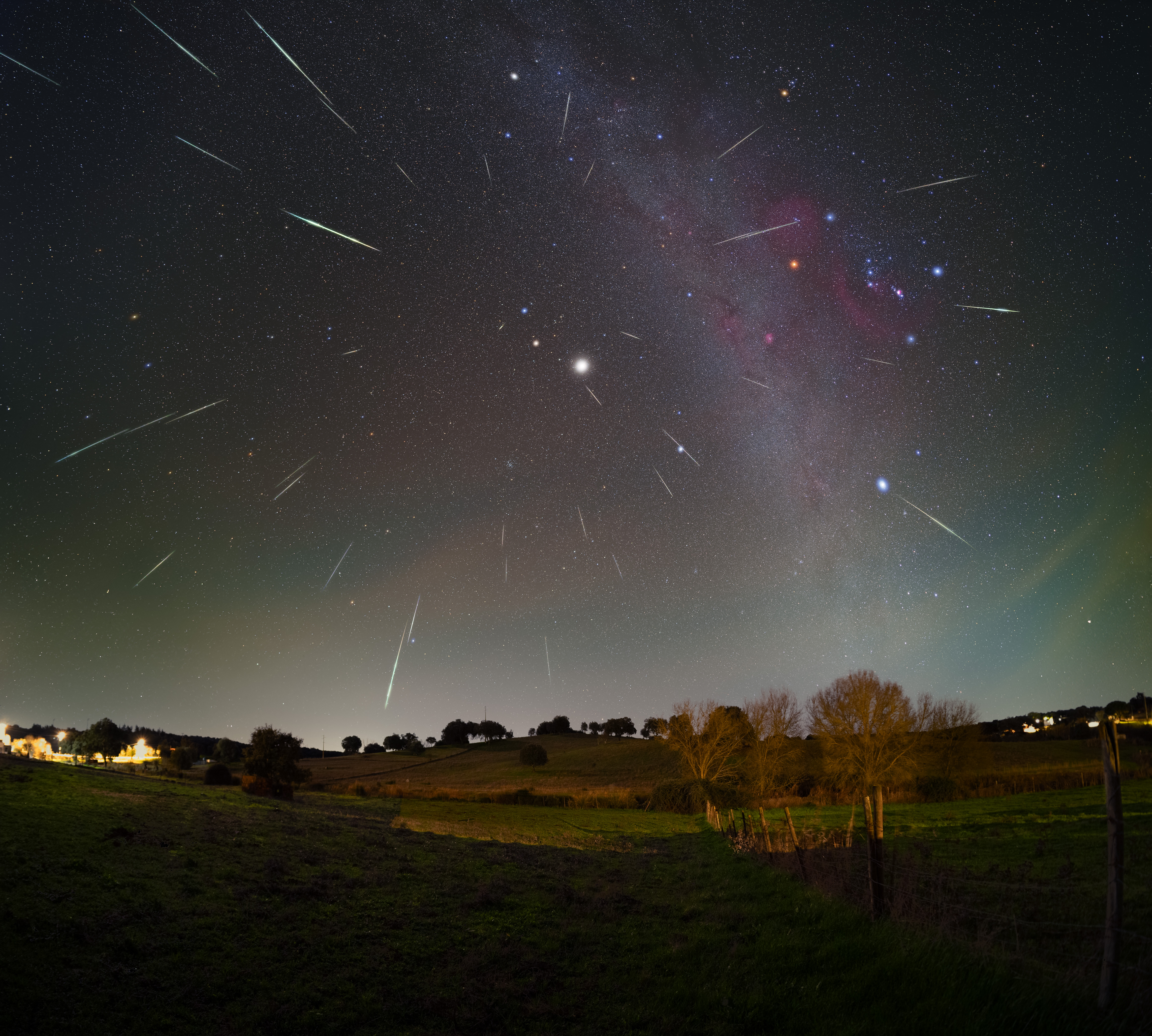
Re:Astronomy Picture of the Day Date Posted:12/19/2025 2:47 AMCopy HTML 2025 December 18 Image Credit & Copyright: David Cruz Explanation: Jupiter, the Solar System's ruling gas giant, is the brightest celestial beacon at the center of this composite night skyscape. The scene was constructed by selecting the 40 exposures containing meteors from about 500 exposures made on the nights of December 13 and 14, near peak activity for this year's annual Geminid meteor shower. With each selected exposure registered in the night sky above Alentejo, Portugal, planet Earth, it does look like the meteors are streaming away from Jupiter. But the apparent radiant of the Geminid meteors is actually closer to bright star Castor, in the shower's eponymous constellation Gemini. In this frame that's just a little above and left of the Solar System's most massive planet. Still, the parent body of Geminid meteors is known to be rocky, near-Earth asteroid 3200 Phaethon. And the orbit of Phaethon itself is influenced by the gravitational attraction exerted by massive Jupiter, in concert with planets of the inner Solar System. |
|
Niceguy2
|
#6183 |
|
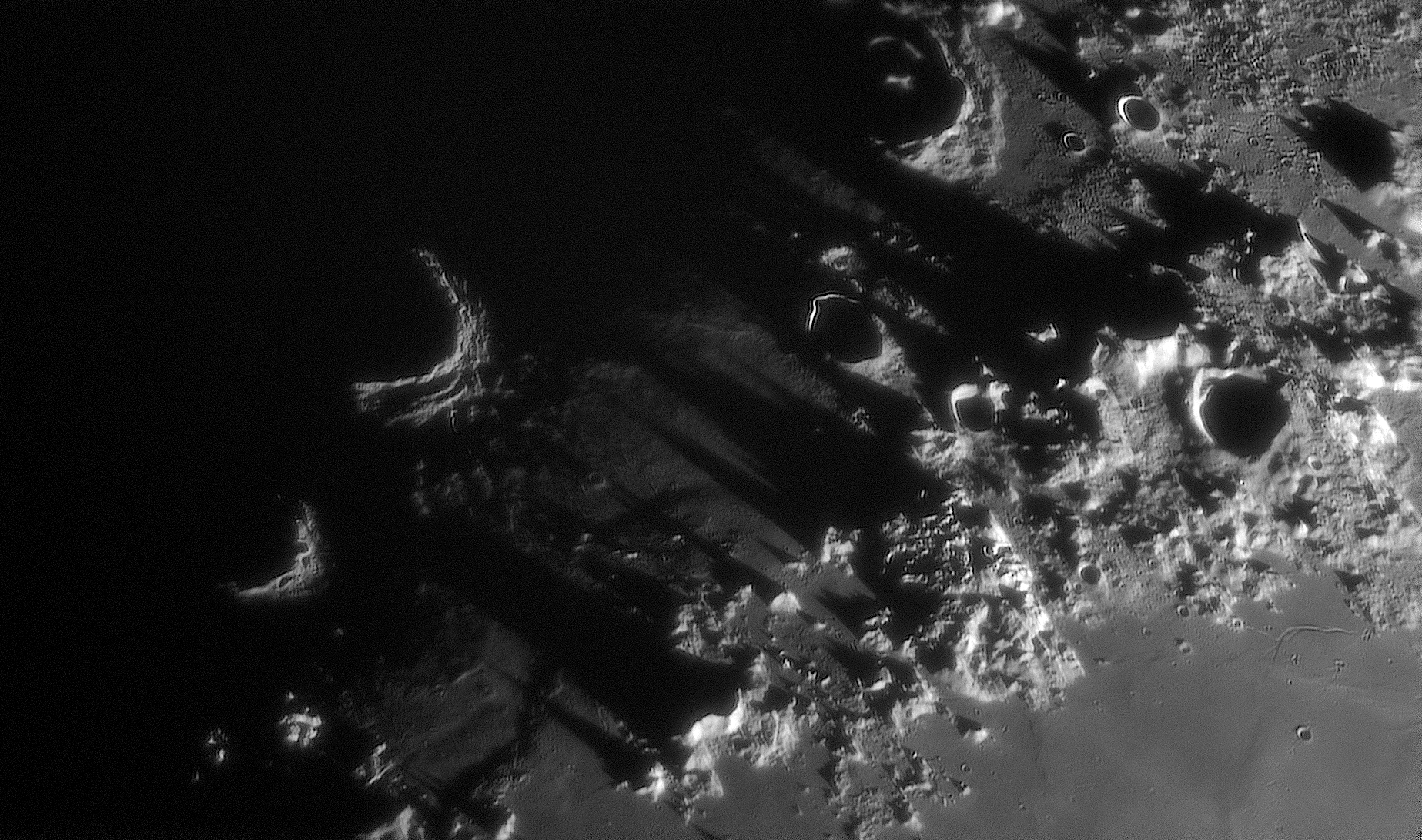
Re:Astronomy Picture of the Day Date Posted:12/20/2025 5:00 AMCopy HTML 2025 December 19 Image Credit & Copyright: Guy Bardon Explanation: When the Moon is at its first quarter phase, the Sun rises along the Montes Caucasus as seen from the lunar surface. The lunar mountain range casts the magnificent, spire-like shadows in this telescopic view from planet Earth, looking along the lunar terminator or the boundary between lunar night and day. Named for Earth's own Caucasus Mountains, the rugged lunar Montes Caucasus peaks, up to 6 kilometers high, are located between the smooth Mare Imbrium to the west and Mare Serenitatis to the east. Still mostly in shadow in this first quarter lunarscape, at the left (west) impact craters reflect the light of the rising Sun along their outer, eastern crater walls. |
|
Niceguy2
|
#6184 |
|
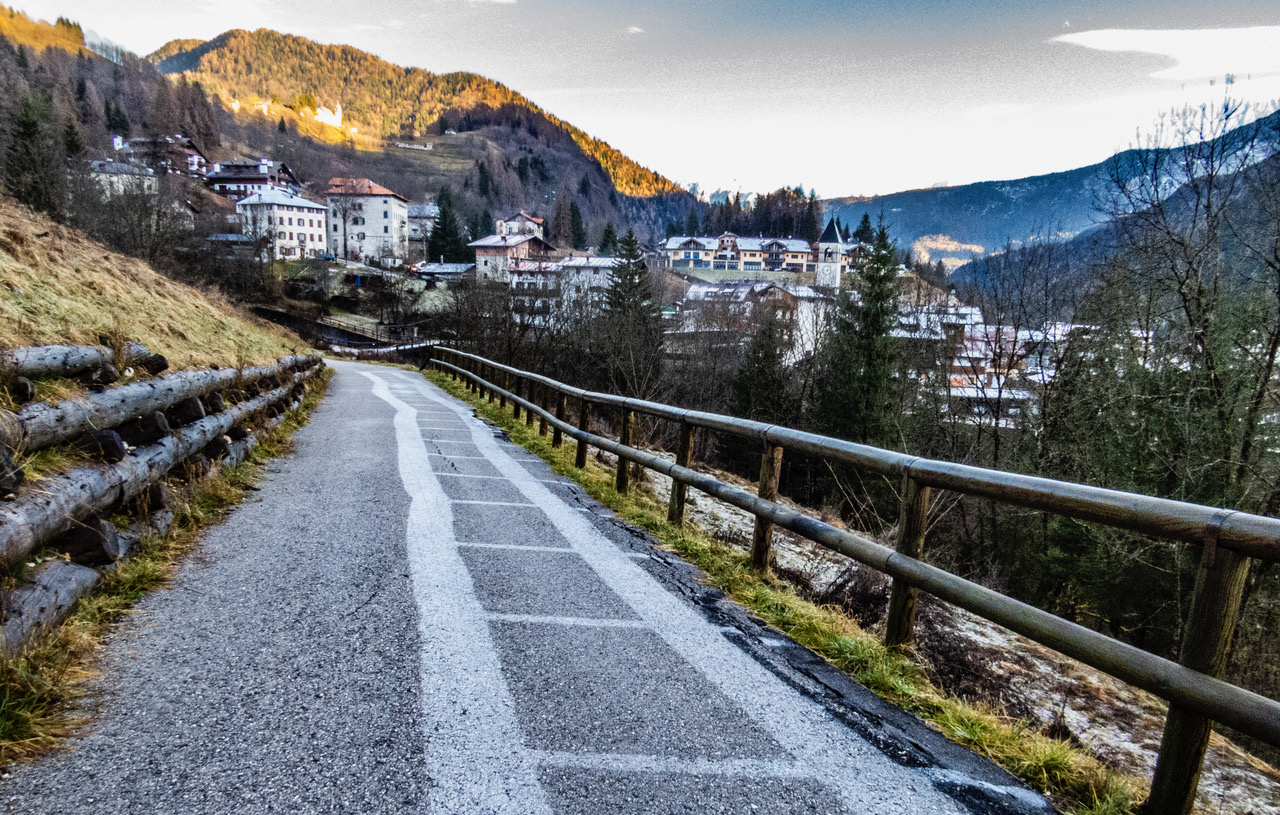
Re:Astronomy Picture of the Day Date Posted:12/21/2025 4:28 AMCopy HTML 2025 December 20 Image Credit & Copyright: Marcella Pace Explanation: The word solstice is from the Latin for Sun and to pause or stand still. And in the days surrounding a solstice the Sun's annual north-south drift in planet Earth's sky does slow down, pause, and then reverse direction. So near the solstice the daily path of the Sun through the sky really doesn't change much. In fact, near the December solstice, the Sun's consistent, low arc through northern hemisphere skies, along with low surface temperatures, has left a noticeable imprint on this path to the mountain town of Peaio in northern Italy. The morning frost on the road has melted away only where the sunlight was able to reach the ground. But it remains in the areas persistently shadowed by the fence, tattooing in frost an image of the fence on the asphalt surface. |